

Step 1
Requirements Analysis
Our services deliver measurable results
We use AI across planning, design, and development to reduce waste, speed up delivery, and improve quality, without increasing budgets.

We joined at the idea stage and supported the project from concept definition through development and public launch.
Start-ups and product teams building learning platforms with live interaction, multi role user management, booking logic, and integrated payment flows.
 Product Design
 Laravel

Ali Daher
CEO
Finding suitable tutors can be time consuming and frustrating, especially when local availability is limited and learning outcomes remain unclear.
This challenge became personal when one of the founders struggled to find effective tutoring for their child.
The idea behind StudyM8 was to remove geographic limitations and replace fragmented tutoring processes with a transparent online platform.
The goal was to enable students to receive targeted support, allow tutors to teach effectively online, and give parents visibility and control over learning progress, all within one accessible digital solution.
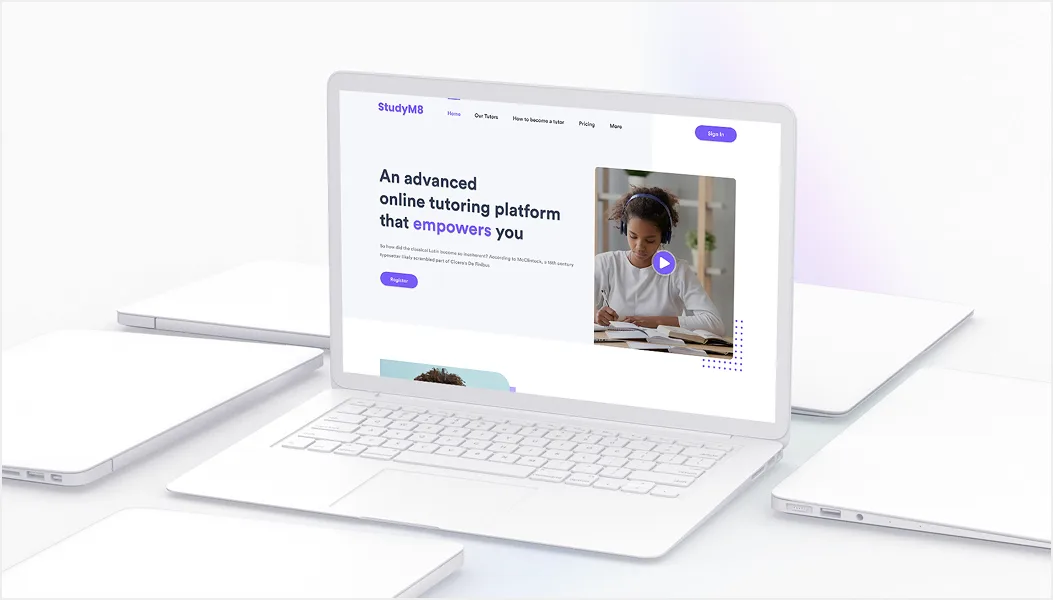
We designed and built a comprehensive online learning platform that connects students, tutors, and parents through structured profiles, live sessions, and assessments.
The solution includes role based access for students, tutors, parents, and administrators.
Live tutoring is conducted via an integrated virtual classroom with whiteboard functionality, while bookings, calendars, payments, and progress tracking are managed centrally.
The platform acts as an intermediary, ensuring structured processes, secure payments, and consistent learning experiences.
Step 1
Requirements Analysis
Step 2
Design
Step 3
Implementation
Step 4
Quality Assurance
Step 5
Deployment
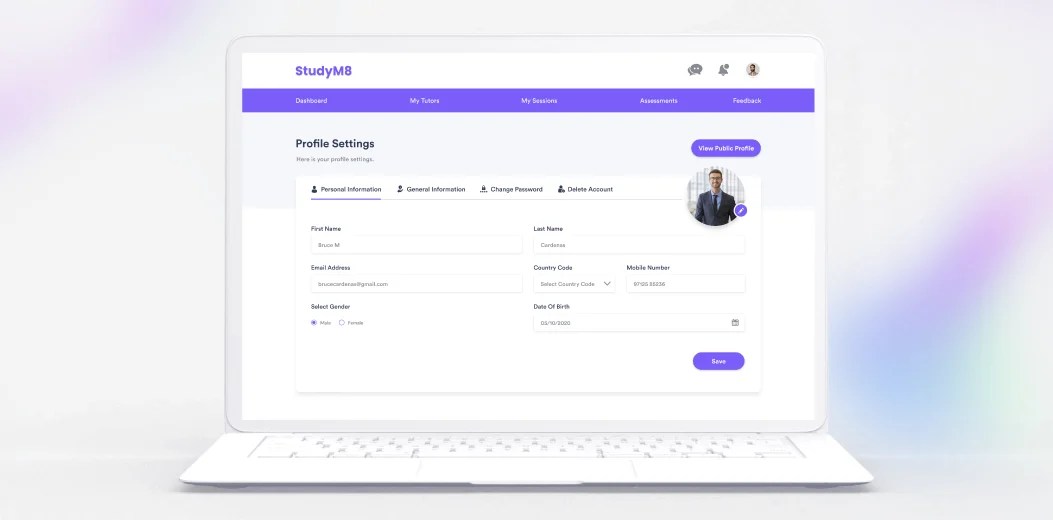
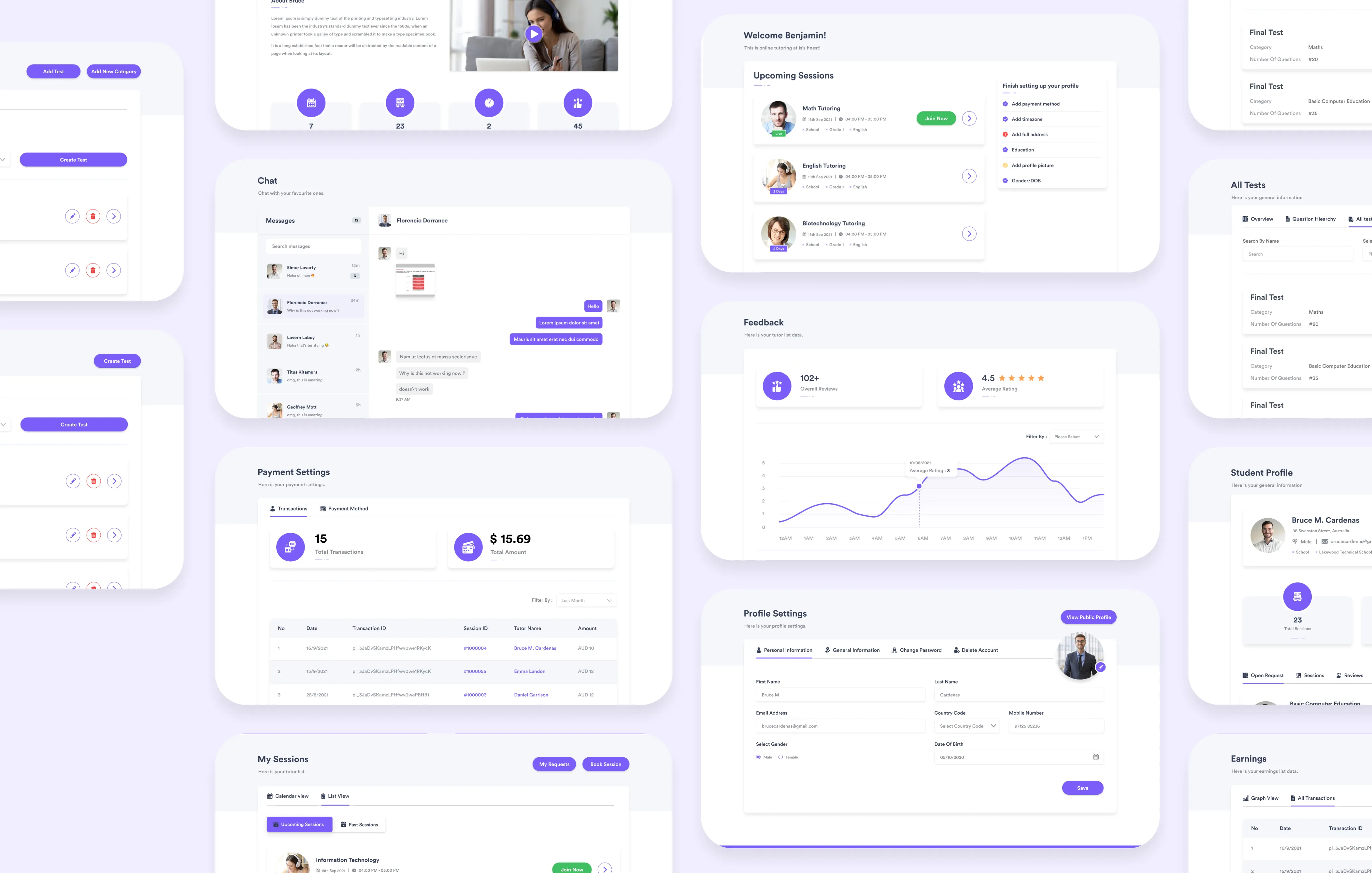
StudyM8 supports students, tutors, and parents with distinct profiles and permissions. Tutors manage qualifications, subjects, availability, pricing, and teaching materials, while students and parents maintain profiles focused on learning goals and sessions. Tutor profiles are verified by the platform to ensure quality.
Parent accounts allow supervision, session booking, and feedback management for children, creating a secure and transparent learning environment for younger users.
Students and parents can search for tutors across a wide range of subjects using structured filters.
Booking a session is streamlined and intuitive, with full visibility into availability, pricing, and tutor experience.
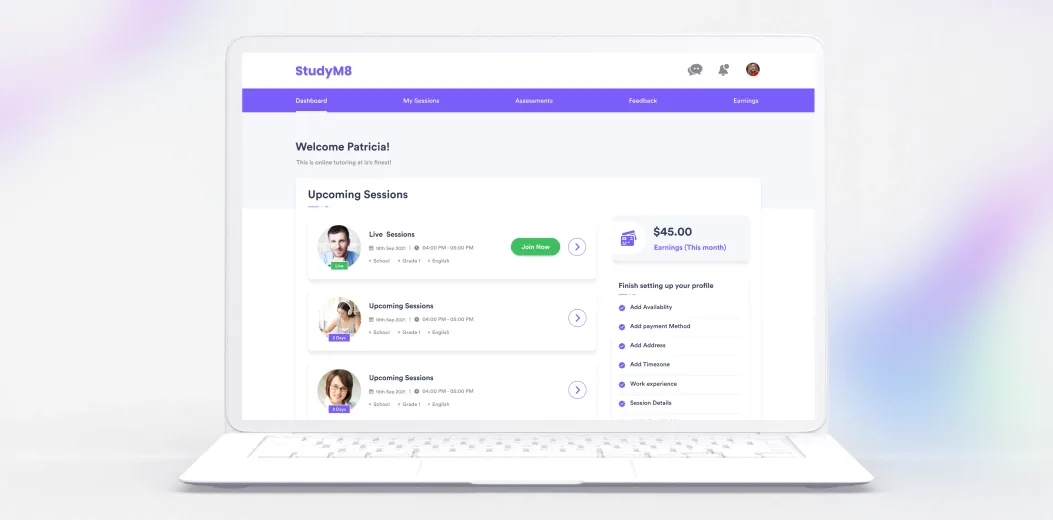
Sessions can be cancelled within defined rules, tutors can be favorited, and users can track upcoming, live, and past sessions directly in their dashboard.
Live sessions are conducted through an integrated virtual classroom that includes video, audio, chat, document sharing, and an interactive whiteboard.
Tutors and students can collaborate in real time, share assessments, and explain concepts visually.
Calendar integration and push notifications ensure sessions are not missed and learning remains consistent.
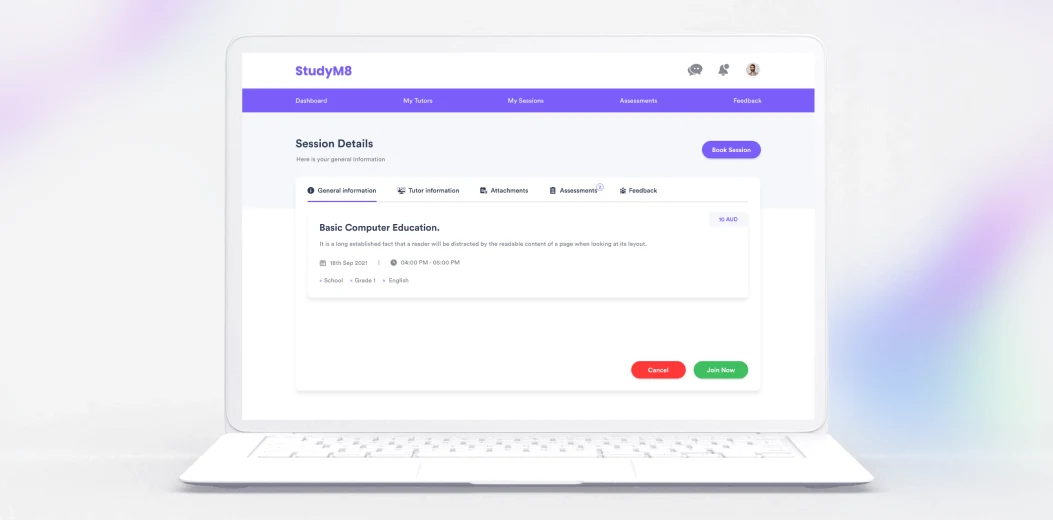
The platform allows tutors to create assessments that students can complete during or after sessions.
Dashboards display pending, submitted, and evaluated assessments, along with pass or fail states.
This provides measurable learning outcomes and helps students and parents understand progress over time.
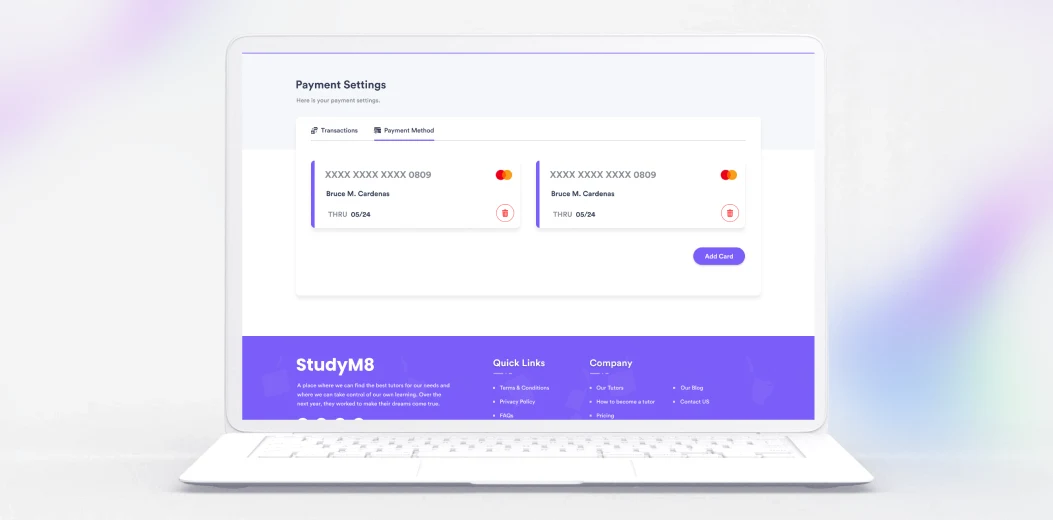
Payments are handled securely through Stripe, with the platform acting as an intermediary and releasing funds after session completion.
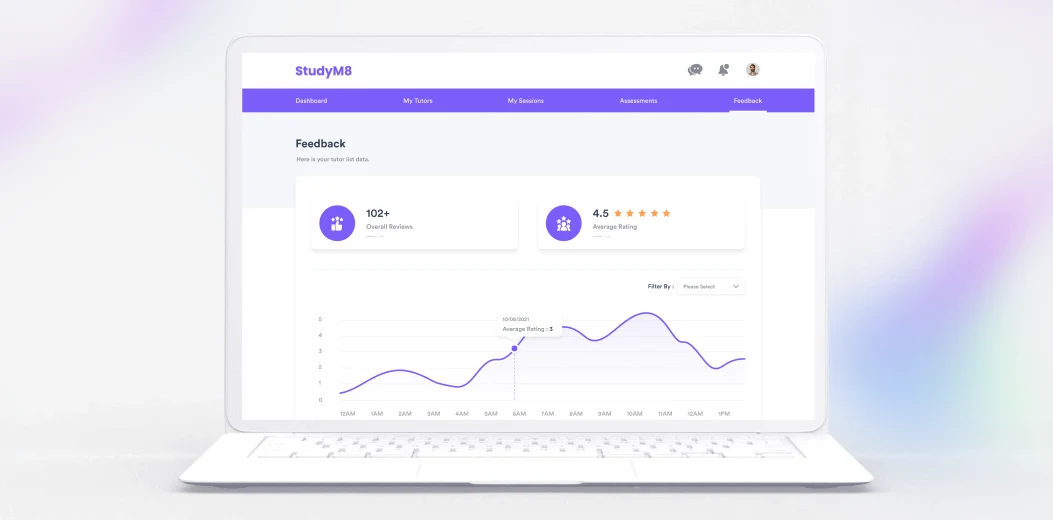
Students and parents can leave ratings and reviews, contributing to quality control and transparency across the marketplace.
The biggest challenge was integrating a real time virtual classroom experience into a structured tutoring platform while maintaining stability, usability, and scalability. Selecting the right third party solution required research, evaluation, and testing.
LearnCube integration introduced technical complexity around whiteboard synchronization, session management, and performance.
During implementation, issues arose that required close collaboration with the LearnCube support team.
Balancing real time interaction, booking logic, payments, and role based access within one system was the central challenge of the project.
We learned that third party integrations must be evaluated not only on features but on reliability and support. Early testing and direct communication with providers reduces long term risk.
These learnings help partners integrate complex real time services without compromising system stability. They reduce integration risk and ensure scalable user experiences.
If your product depends on real time interaction, validate third party tools early and plan integration effort realistically. Stability matters more than feature depth.
The most special part of this project was integrating a real time virtual classroom into a complex tutoring ecosystem that serves students, tutors, and parents simultaneously.
The goal was not just to enable video calls, but to recreate the clarity and interaction of face to face tutoring through a shared whiteboard, live assessments, document exchange, and structured session flows.
The LearnCube integration required deep technical coordination and thoughtful UX design to ensure sessions felt natural rather than technical.
At the same time, the platform had to respect different roles, permissions, and responsibilities, especially when parents are involved.
Bringing all of these elements together into a stable, intuitive system demonstrated how carefully designed technology can remove educational barriers and create meaningful learning experiences beyond local limitations.
 Ali Daher
CEO
5.0
Ali Daher
CEO
5.0
Building an online learning platform was new for us, but the team made the process feel manageable. Requirements were understood quickly, feedback was taken seriously, and progress stayed transparent. We felt well supported from the first idea to a working product.
Every successful project leaves behind measurable results and a clear path forward.
The references below show how we work, what we deliver, and the outcomes our partners achieve with us.
 Strategy
 UI/UX
App Room - #1 Bicycle ERP of Switzerland
UI/UX
App Room - #1 Bicycle ERP of Switzerland
 Cindy Essl
CEO, app-room GmbH
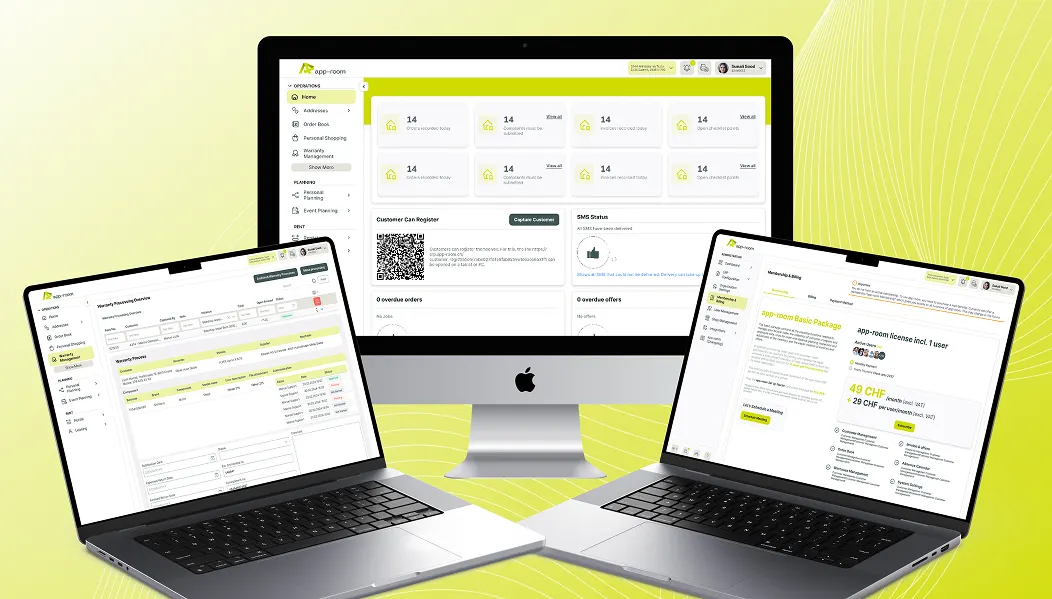
App Room is the leading ERP provider for bicycle retailers in Switzerland, supporting both small shops and large chains in managing inventory, sales, planning, and administration. As the product evolved over eight years, the interface no longer reflected modern expectations or the company's new brand identity. The goal was to redesign the ERP to reflect current design standards, incorporate user feedback, and create a maintainable design foundation without losing any functional depth.
25%
less support effort
Use case
Cindy Essl
CEO, app-room GmbH
App Room is the leading ERP provider for bicycle retailers in Switzerland, supporting both small shops and large chains in managing inventory, sales, planning, and administration. As the product evolved over eight years, the interface no longer reflected modern expectations or the company's new brand identity. The goal was to redesign the ERP to reflect current design standards, incorporate user feedback, and create a maintainable design foundation without losing any functional depth.
25%
less support effort
Use case
 Strategy
UI/UX
Strategy
UI/UX
 Website
 Back-End
 Admin
Gesunde Zeiten - Simplifying Meal Planning for Families
Admin
Gesunde Zeiten - Simplifying Meal Planning for Families
 Elsa Beerbaum
CEO & Founder, Gesunde Zeiten
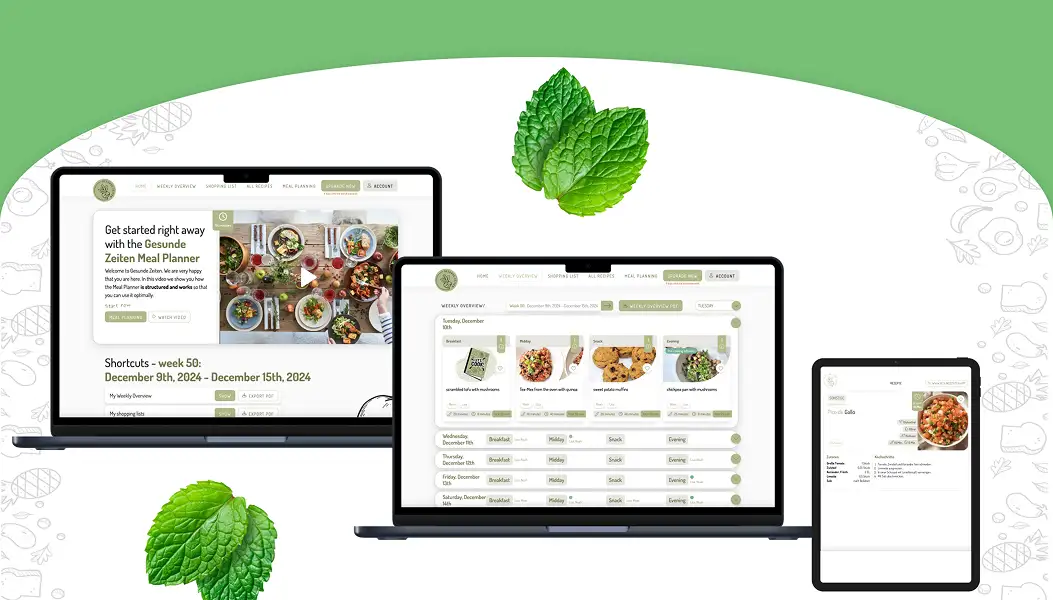
Meal planning for families is often a demanding responsibility, especially for mothers who must balance allergies, dietary preferences, shared meals, leftovers, and limited time. What should support healthy living quickly becomes a daily source of stress. At the same time, balanced nutrition is essential for well-being and productivity, making this challenge impossible to ignore.Our partner's idea was to ease this burden by creating a smart meal planner that supports families in organizing their weekly meals in a realistic and structured way. Through an individual and detailed configuration, the system considers the needs of each family member while significantly reducing daily cooking effort. The goal was to enable healthy, varied nutrition without turning food planning into a constant mental load.Realizing this idea required deep nutritional expertise, real experience as a mother, and the ability to translate both into a simple and intuitive digital solution. Together with our partner, we combined domain knowledge and technical responsibility to transform an initial vision into a reliable and high quality product that genuinely supports families in their everyday routines.
50+
subscriptions in 2 months
Use case
Elsa Beerbaum
CEO & Founder, Gesunde Zeiten
Meal planning for families is often a demanding responsibility, especially for mothers who must balance allergies, dietary preferences, shared meals, leftovers, and limited time. What should support healthy living quickly becomes a daily source of stress. At the same time, balanced nutrition is essential for well-being and productivity, making this challenge impossible to ignore.Our partner's idea was to ease this burden by creating a smart meal planner that supports families in organizing their weekly meals in a realistic and structured way. Through an individual and detailed configuration, the system considers the needs of each family member while significantly reducing daily cooking effort. The goal was to enable healthy, varied nutrition without turning food planning into a constant mental load.Realizing this idea required deep nutritional expertise, real experience as a mother, and the ability to translate both into a simple and intuitive digital solution. Together with our partner, we combined domain knowledge and technical responsibility to transform an initial vision into a reliable and high quality product that genuinely supports families in their everyday routines.
50+
subscriptions in 2 months
Use case





 Behance

