


Your brand is only as secure as your app. Users have become far more aware of data security, and regulations such as the GDPR set strict rules for protecting their data. You cannot reach 100% protection - but you can make your app so hard to attack that the effort is not worth it.
Key takeaways
- Plan security from the start with a blueprint and clear responsibilities.
- Use the OWASP Top 10 and OWASP Mobile Top 10 as checklists.
- Encrypt data on the device and in transit.
- Harden your stack and patch consistently.
- Prioritise vulnerabilities by impact and monitor in real time.
Want to learn more?
In a free strategy call we answer your questions about cost, technology and process.
Book a callWhy app security is a business issue
High-profile attacks have shown how much is at stake in an increasingly digital world. Data protection laws such as the GDPR and the CCPA require businesses to set up robust data security policies and practices.
Failing to comply can lead to substantial fines, on top of lasting damage to your brand, lost revenue and higher costs. Much of that can be avoided with concrete steps. These industry best practices protect your app against most threats:
1. Security by design: create a security blueprint
You cannot secure an app with scattered measures that work in isolation. You need a blueprint that identifies every source of risk and addresses it with a clear plan.
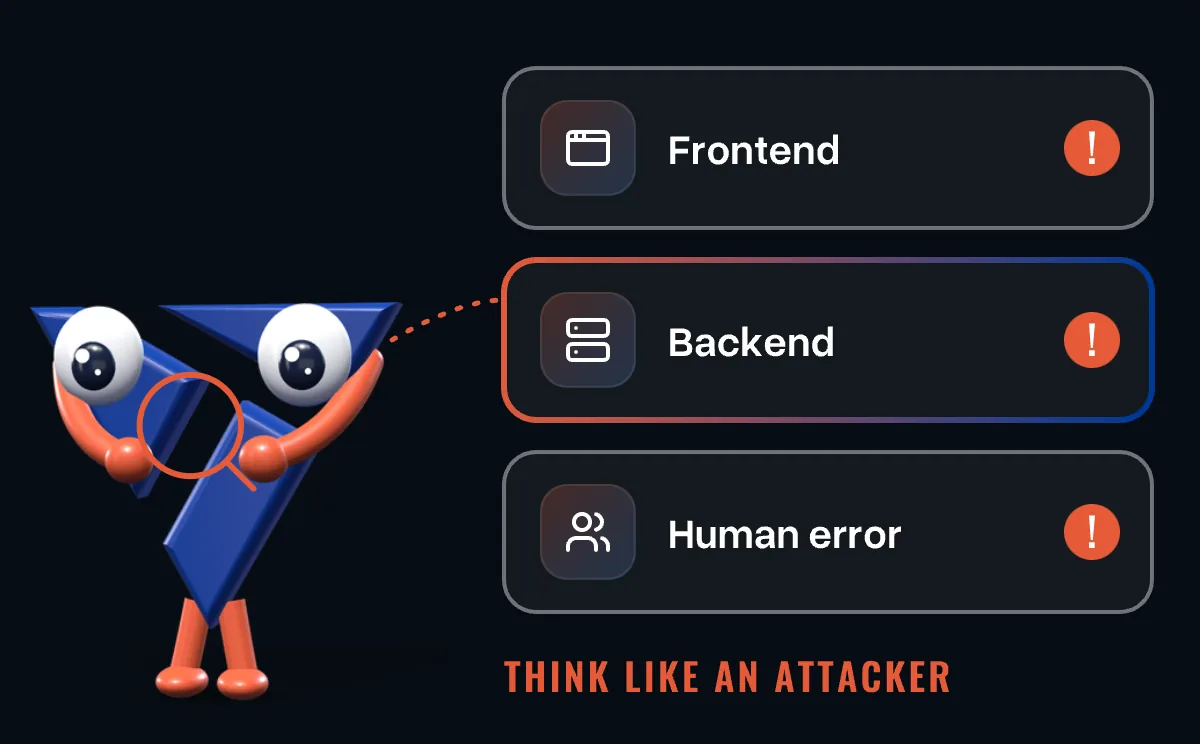
Start by thinking like an attacker. Identify every weak point - front end, backend, human error and more. Once the protections are in place, test them rigorously; decide whether you use automated tools, human testers or an external penetration testing provider.
Then keep a checklist of your security infrastructure and name the people responsible for keeping each element up to date with current best practices. That creates clear accountability.
2. Follow the OWASP Top 10
Open-source and third-party components are a common source of vulnerabilities, and you cannot avoid them altogether. Attackers study exactly these technologies to find weak spots.
The OWASP Top 10 is a checklist of the most critical security risks for web applications, revised every few years based on real attack data. OWASP also maintains a Mobile Top 10 for mobile apps. Working through these lists protects your app against a large share of common attacks.
3. Use platform-specific protection
iOS and Android take different approaches to app security, and both offer many built-in security features. Use them. At the same time, identify platform-specific limitations that could weaken your app's security and address them.
4. Isolate the app with app wrapping
Attackers often exploit vulnerabilities in the operating system or device hardware. App wrapping separates your app from the platform and gives you control over whether app data can be shared with the device or other apps. It is used mainly for business apps on managed devices.
5. Encrypt everything
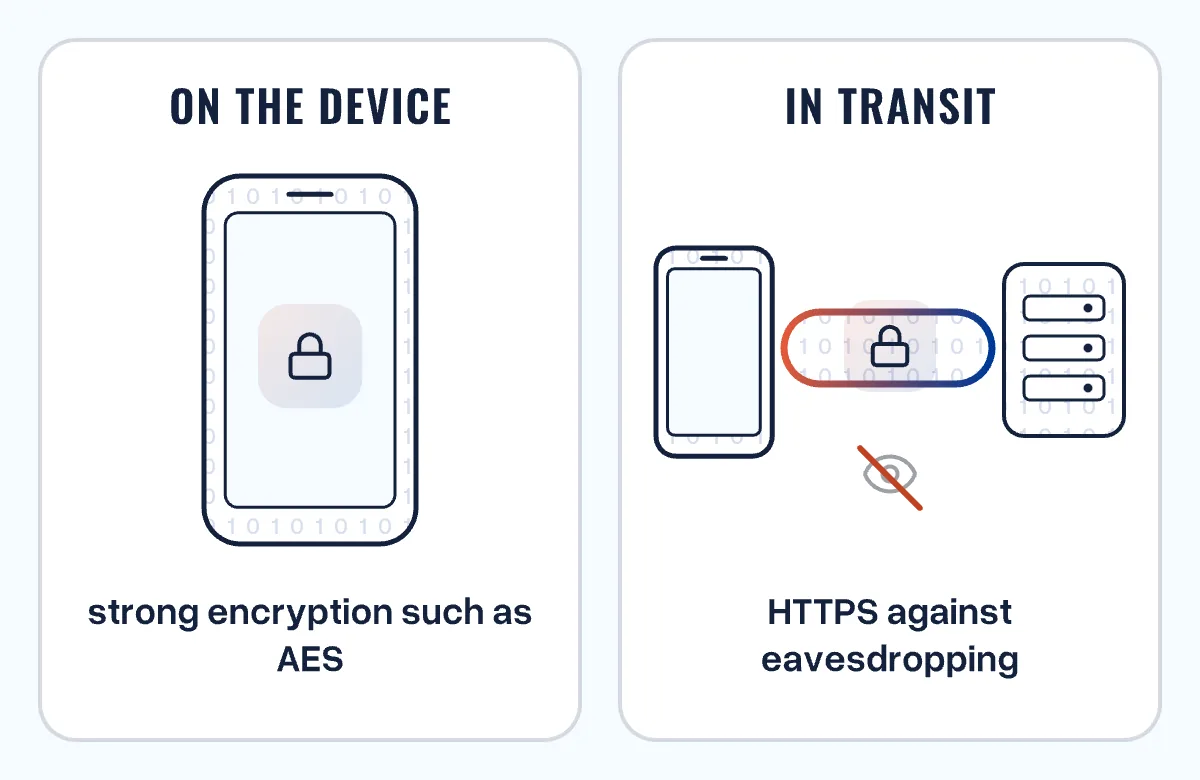
Strong encryption keeps your app data protected even if an attacker gains access to the device. Use strong, established algorithms such as AES.
Encrypt network connections too, using HTTPS, to protect data in transit against man-in-the-middle attacks. Modern apps rely heavily on APIs, and encryption keeps the data in those calls away from prying eyes.
6. Harden everything
Harden your whole stack, from servers to the frameworks you use. It is extensive work; these steps are a good start:
- Remove modules and extensions you do not use
- Avoid dynamic or remote code execution wherever possible
- Set the maximum script execution time to safe limits
- Write-protect servers, services, databases and configuration files
- Use security modules such as AppArmor or SELinux on your servers
- Restrict incoming and outgoing traffic
- Restrict access to app resources and grant tiered access based on need only
7. Keep everything up to date
Many vulnerabilities already have a patch by the time they become known. A consistent patch management policy closes a large number of gaps. Poor patching, on the other hand, is a recurring cause of data breaches. Keep servers, frameworks, software and tools updated.
8. Prioritise vulnerabilities
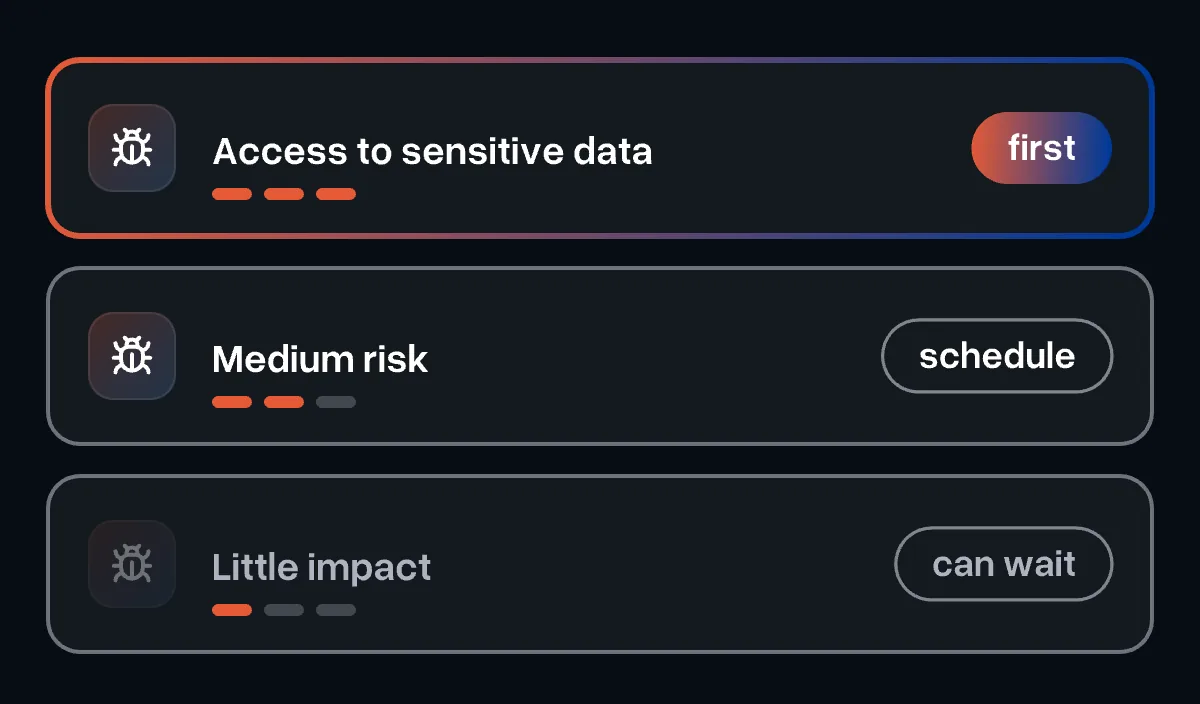
You will keep discovering new vulnerabilities, in the front end and in backend systems. Do not try to fix them all at once or in the order they appear. Define a vulnerability management policy that ranks them by criticality and urgency, and focus on those with the biggest impact on security and reputation.
Some vulnerabilities have little or no impact on critical systems and can wait - as long as you never neglect those that could give attackers access to sensitive data or critical systems.
9. Monitor and protect in real time
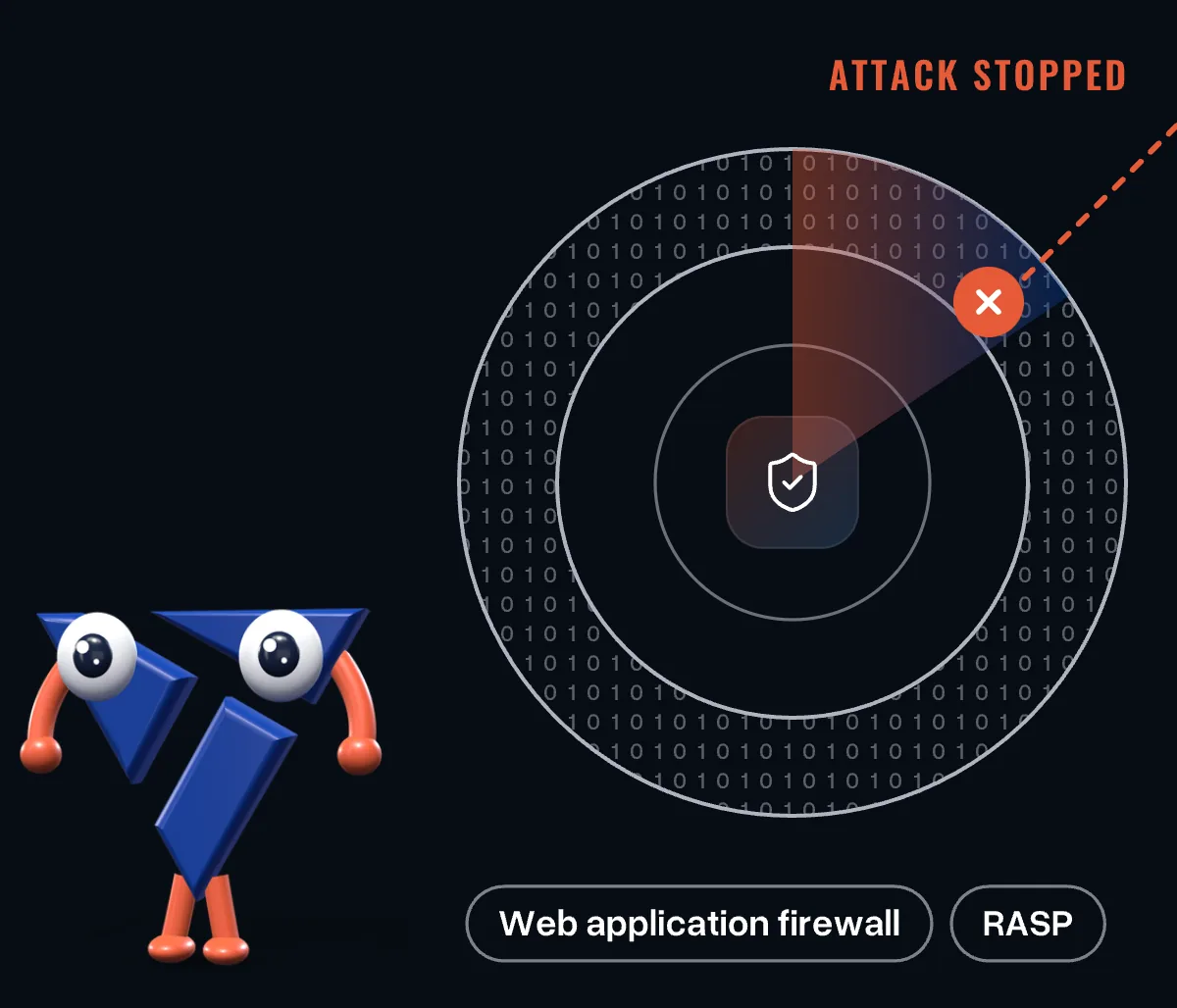
No policy gives you complete protection. The good news: you can detect and stop attacks as they happen. Common tools are web application firewalls and runtime application self-protection (RASP). If your app handles highly sensitive user or company data, consider a security operations centre (SOC) that monitors your security posture in real time.
Never get complacent
App security keeps evolving. Stay informed about new technologies, patches and updated best practices, and keep your app current in every respect.
Want to review the security of your app or plan it into a new one? Get in touch.