

Content management systems have made it possible for anyone to launch a website in very little time. Custom-developed websites take longer and cost more, but give you full control. Which one is right depends on what your website has to achieve.
Key takeaways
- A CMS is fast, affordable and easy to edit, but limited by themes and plugins.
- A custom website gives full control over brand, journeys, features and performance.
- Content-heavy and mostly static sites are often a good CMS fit.
- When branding and user experience outrank budget and speed, go custom.
- Many projects combine a CMS backend with a custom front end.
Want to learn more?
In a free strategy call we answer your questions about cost, technology and process.
Book a callWhy the question matters
CMS platforms such as WordPress, Joomla and Drupal let you create a simple website in minutes and a well-designed one in days. They make it easy to add pages and edit content, which is why most websites run on a CMS.
Market share does not answer the question for your business, though. A custom-developed website offers technical benefits, and a psychological one: it is unique. Where CMS sites based on standard themes can look alike, a custom site can embody your brand and set you apart.
What is a CMS?
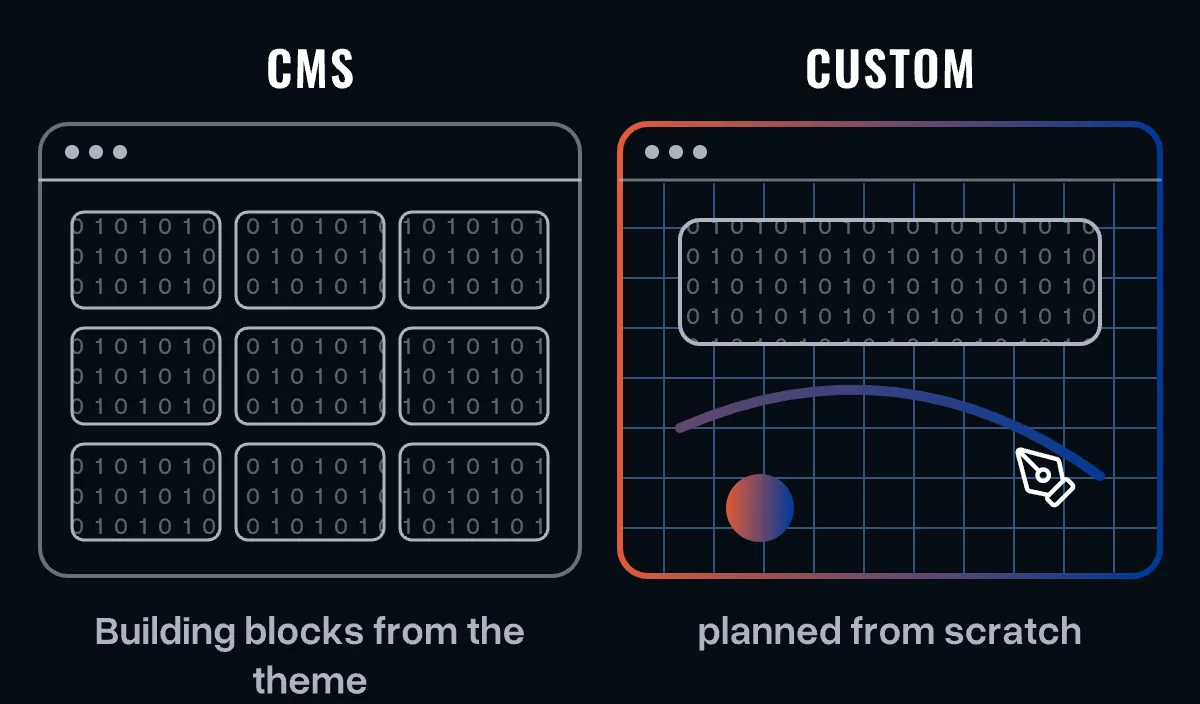
A content management system is a pre-built platform that uses themes and built-in functions to create and run a website. Page design, features and navigation come from the CMS and its themes. Additional features come from its plugin ecosystem.
You can create, launch and edit a site without learning a programming language. Most CMS platforms still give you code-level access if you need it.
What is a custom-developed website?
A custom website is designed and developed from scratch by professionals, using a range of tools and programming languages. It involves more coding, and it gives you the highest level of control over usability, performance and features. For a complex vision, it is often the only option. Custom sites can also be leaner and more optimised for performance than theme-based CMS sites.
How they differ
- Features: a CMS covers the basics, and plugins add more. Plugin quality varies, and plugins can conflict with each other or break the site. If you need many or advanced features, custom development is often the better route.
- Workflows: a CMS comes with ready-made workflows that are easy to maintain. A custom site lets you build workflows around your processes, which takes more effort.
- Time: a CMS site can be ready in hours or days. A custom site usually takes weeks or months. If time to market is the priority, a CMS is the easy answer.
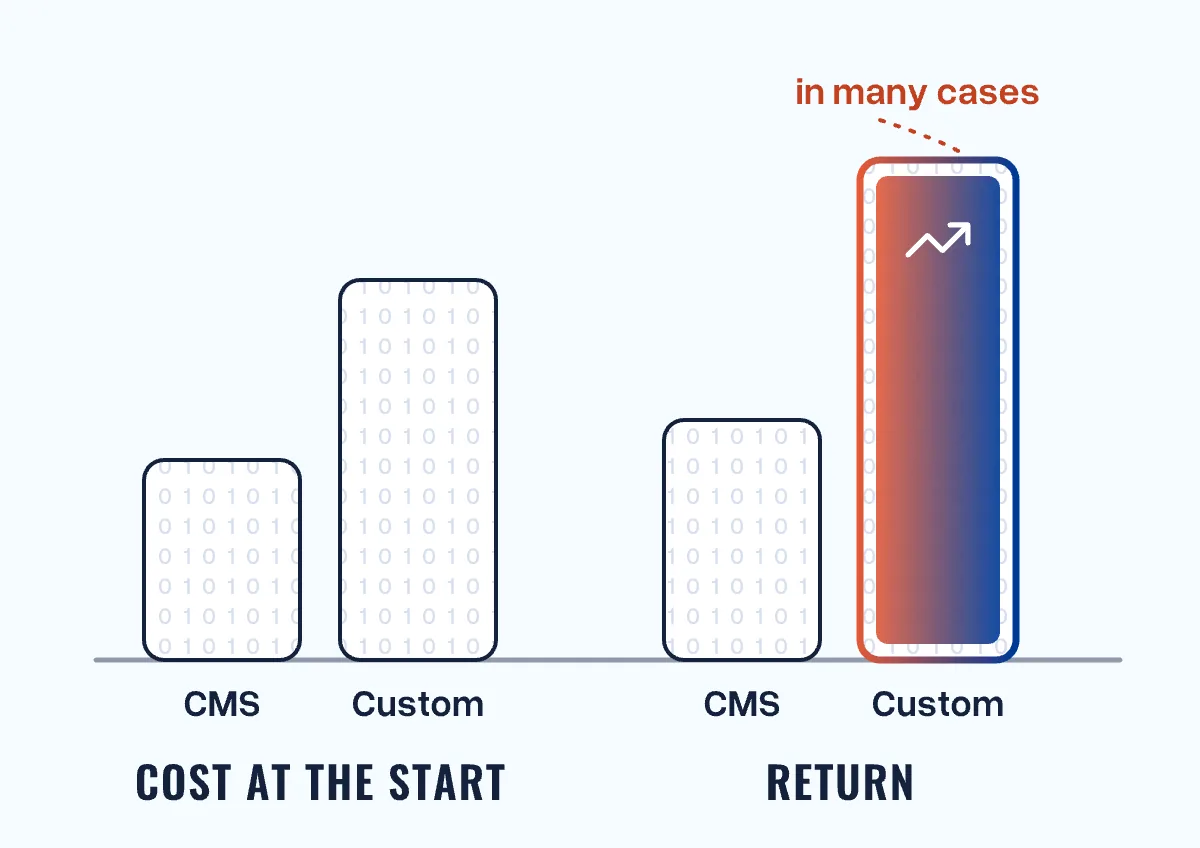
- Cost: a basic CMS site is inexpensive; a good-looking one needs a web developer but little coding. A custom site involves UX and UI designers, front-end and back-end developers, project management, testing and ongoing support, so it costs more.
- UI/UX: a CMS site is limited by its theme, and heavy customisation can break it. A custom site gives you full control over every detail of the look and feel.
When a CMS is the right choice
- Content publishing: blogs, news sites or podcasts publish often. A CMS lets editors publish without developers or IT. That is why even larger online shops use a CMS, so product managers can edit product pages themselves - and many companies run a CMS in the background behind a custom front end.
- Mostly static information: if your site mainly informs and rarely changes, a CMS is an affordable way to do it - a common fit for startups and small businesses when cost matters more than branding.
- Ready-made tools: plugins for SEO, analytics and more are easy to install and reduce reliance on developers.
When a custom website is the right choice
A custom website costs more up front, but in many cases it offers a higher return:
- A distinct brand: a well-designed custom site reflects your brand values and tells your story. Every element can match your offline branding, so people recognise you by more than the logo.
- Designed user journeys: planning goes deeper into your audience's needs and behaviour, so you control how users move through the site towards conversion.
- SEO from the start: involving SEO early means structure, performance and content are built to be found.
- Advanced features and performance: clean code without bloated themes and conflicting plugins loads fast, even on slow connections - and visitors who wait leave.
So: CMS or custom?
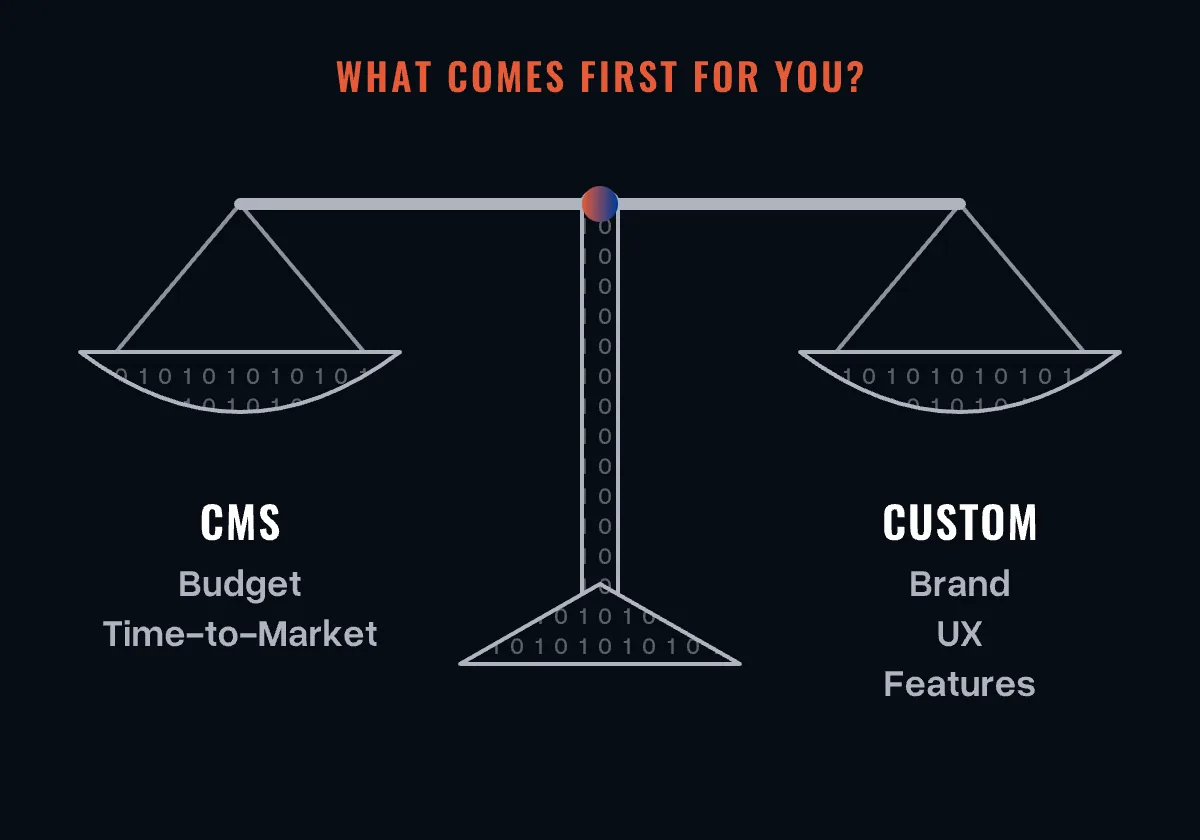
As a rule: when budget and time to market come first, a CMS is a good fit. When branding, user experience and specific features come first, custom development is the right choice. Many projects combine both.
We build both standard CMS websites and custom websites. Get in touch to discuss which fits your goals.