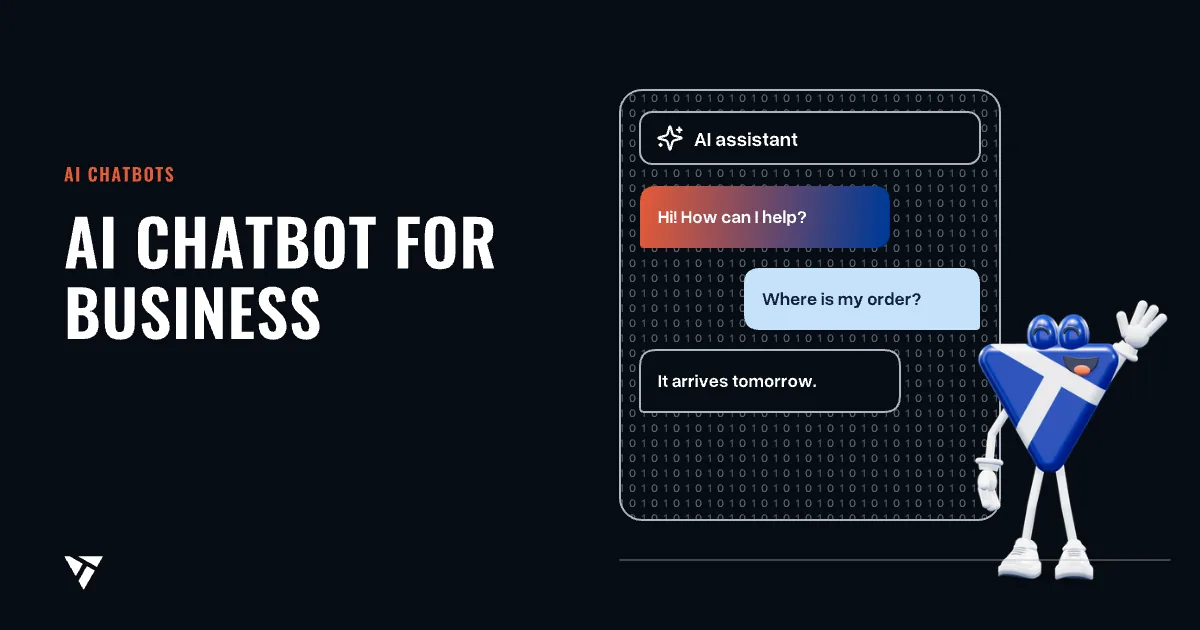


An AI chatbot for business promises answers around the clock, fewer routine requests for your team and faster help for your customers. At the same time, the questions pile up: which kind of bot fits your case, how do you stop it from inventing answers, where does the data go, and what does the EU AI Act require? This article answers these questions in order, so you can decide whether and how a chatbot makes sense for you.
- There are three main types: the website chatbot, the customer service bot and the internal knowledge bot - each with different requirements.
- With RAG, the chatbot looks up answers in your documents and names its source instead of guessing.
- Under the EU AI Act, users must be told they are talking to an AI from the first interaction - applicable since 2 August 2026.
- GDPR requires data processing agreements, a clear data location, data minimisation and defined retention periods for chat logs.
- Costs are driven by data quality, integrations, channels, running costs per request and quality assurance.
Want to learn more?
In a free strategy call we answer your questions about cost, technology and process.
Book a callWhat makes an AI chatbot different today
Older chatbots worked with decision trees: a fixed set of questions, buttons and prepared answers. As soon as a customer asked something unforeseen, the bot failed. A modern AI chatbot is based on a large language model. It understands questions in natural language, even with typos or in another language, and formulates answers itself.
That is its strength and its risk at the same time. A language model writes fluently, but on its own it does not know your prices, your terms or your product details. Without access to your data, it fills gaps with plausible-sounding guesses. The most important design decision is therefore: where does the bot get its knowledge from?
Three types of AI chatbot for companies
-
1. Website chatbot
- Task
- Answers visitors' questions about products, services, prices and processes, and leads them to the next step, such as a demo, a quote request or the right contact person. Its job is orientation and lead qualification.
- Needs access to
- Your information on products, services, prices and processes
- What counts
- A clear scope: the bot should know what it does not know and then hand over to a person.
-
2. Customer service bot
- Task
- Takes over recurring requests: order status, returns, appointments, simple troubleshooting.
- Needs access to
- Your systems, such as the shop, the ticket system or the CRM
- What counts
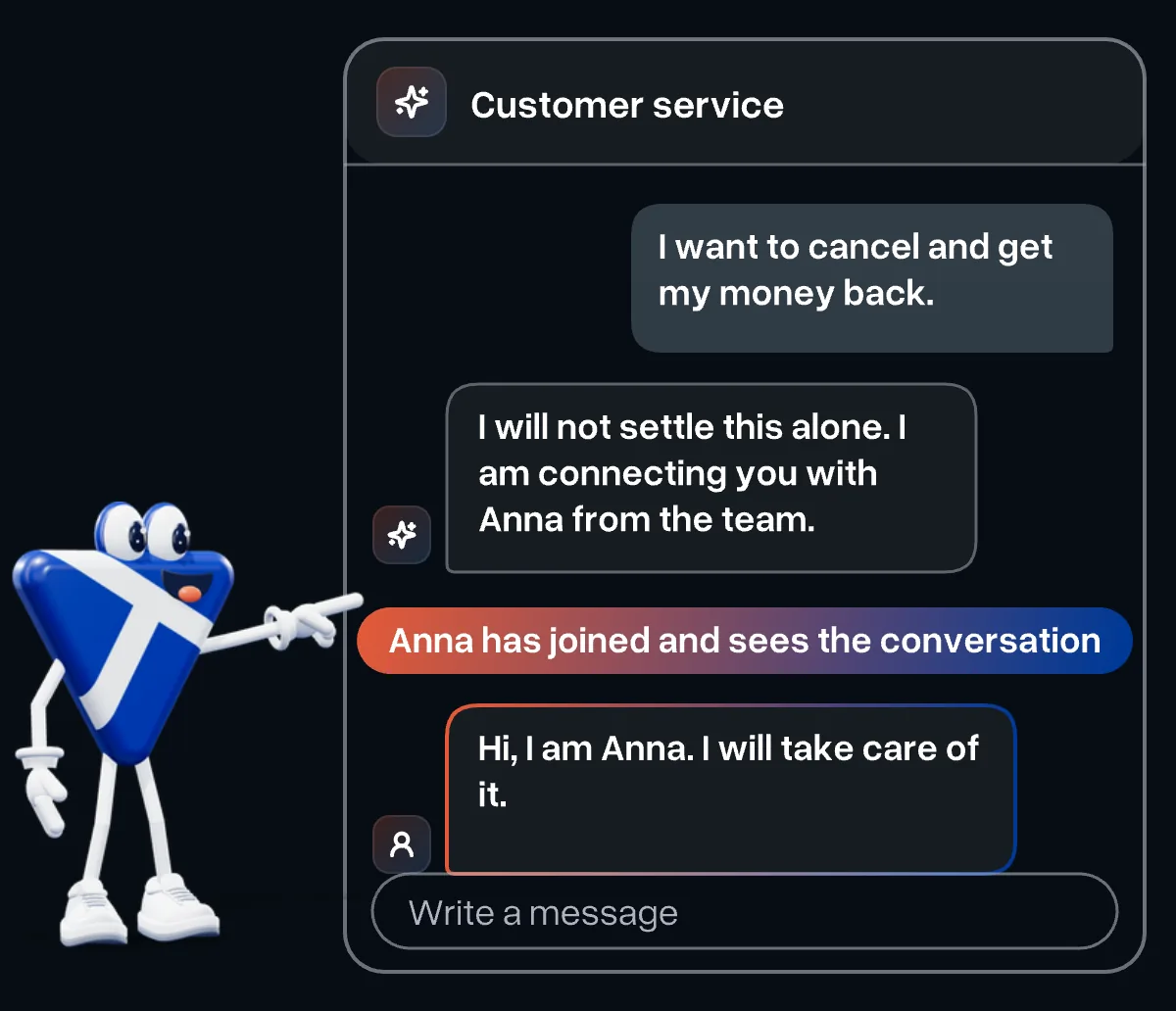
- It must recognise when a case is too complex or a customer is annoyed, and pass the conversation to your team with the full history.
-
3. Internal knowledge bot
- Task
- Answers your employees' questions. New colleagues find information faster, and experienced colleagues are asked less often.
- Needs access to
- Manuals, guidelines, product documentation or past tickets
- What counts
- Access rights: the bot may only show each person what that person is allowed to see.
RAG explained simply: how the chatbot answers from your data
Many business chatbots today use an approach called retrieval-augmented generation (RAG), first described in a research paper from 2020. Simply put, the chatbot looks things up before it answers:
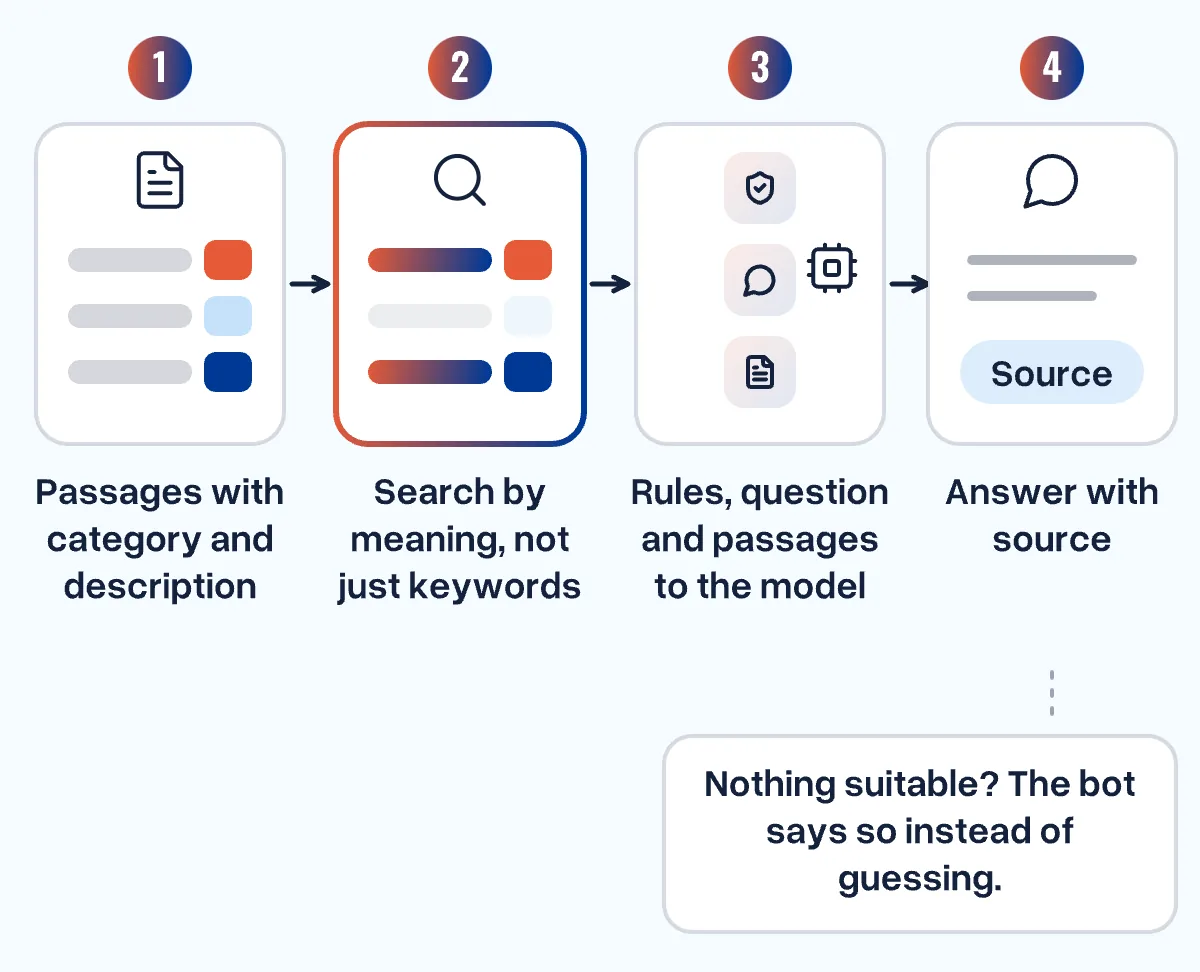
Two things make the difference: the passages get categories and short descriptions, so the search finds by meaning and not just by keywords. And besides the question and the passages, the model gets fixed rules: how to answer, what it may do and what not.
The advantages: the model does not have to be trained on your data, new documents are available immediately, and every answer can be checked. The limit: the bot is only as good as your documents. Outdated or contradictory content leads to outdated or contradictory answers. Preparing the content is therefore often the biggest part of the work.
Data protection: GDPR and data location
A chatbot processes what users type, and that often includes names, email addresses, order numbers or health information. The GDPR therefore applies in full.
German data protection authorities have published a practical guidance on AI and data protection (DSK, May 2024), which focuses on applications built on large language models, including chatbots. Involve your data protection officer early; that is much cheaper than changing the architecture later.
EU AI Act: the disclosure duty for chatbots has applied since 2 August 2026
The EU AI Act has largely applied since 2 August 2026 (Article 113). For chatbots, Article 50 is the key provision: AI systems that interact directly with people must be designed so that users are informed they are interacting with an AI system, unless that is obvious from the context. The information must be clear and given at the latest at the first interaction.
The Digital Omnibus adopted in 2026 postponed the rules for high-risk AI to December 2027 and August 2028, according to the European Commission, but not the transparency duty. In practice, that means: label the chat window clearly, for example "AI assistant", and say it again in the first message. If your bot is used in a sensitive area such as personnel selection, check early whether stricter obligations apply. Which deadlines apply, what the Digital Omnibus postponed and what you should check now is covered in detail in our article EU AI Act 2026: what companies building or using AI software need to do now.
Liability: your chatbot speaks for your company
What a chatbot says can be attributed to your company - a Canadian tribunal decided exactly that in 2024.
The lesson: limit the bot to verified content, show sources and hand over to a person when in doubt.
What does an AI chatbot cost? The real cost drivers
There is no fixed price, because the effort depends on a few clearly identifiable factors:
- Data sources: how many sources there are, in which formats and how well maintained they are. Cleaning up content is often more work than the technology.
- Integrations: a bot that only answers is simpler than one that reads order status from the shop or creates tickets in the CRM.
- Channels and languages: website, app, WhatsApp or the intranet; one language or several.
- Running costs per request: language models are billed by usage. The model choice, the length of the answers and the number of conversations determine the monthly bill, plus hosting.
- Quality assurance: fixed test questions with known answers, monitoring and regular checking of conversations.
- Content maintenance: someone has to keep the documents up to date, otherwise answer quality declines.
An off-the-shelf chatbot tool is often enough for a website FAQ. Custom development pays off when the bot needs to access your systems, when data protection requires a particular setup, or when the bot is part of your product. How software budgets come about in general is explained in our article on software development cost in 2026.
Checklist before you start
- Which concrete requests should the bot answer, and which should it never answer?
- Which documents and systems contain the correct answers, and who maintains them?
- When and how does the bot hand over to a person?
- Where is the data processed, and are all data processing agreements in place?
- Is the chat clearly labelled as AI from the first message?
- How do you measure success, for example resolved requests, handovers or customer satisfaction?
- Who checks answer quality regularly after launch?
How Vitec helps you
We develop AI chatbots and assistants that answer from your data (RAG), with a source and a handover to people. We choose the model to suit your task and your data protection requirements: Claude, GPT, Gemini or open-source models in the EU. Which data the AI may see, and which obligations from the EU AI Act apply, we define together before the start.
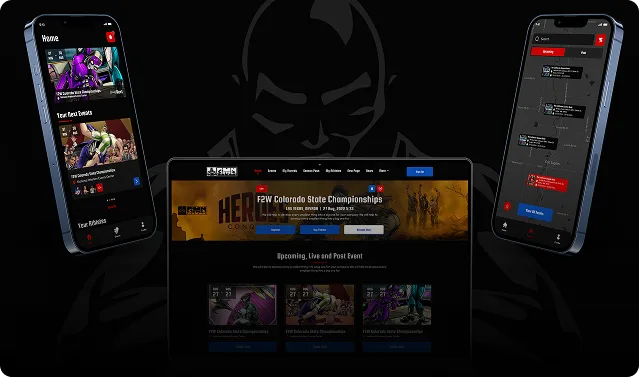
We start with a prototype using your real data, so you can see early how good the answers are. Before every release, fixed test questions with known answers run, so we notice if quality drops. One example from our references: for RMN Events we built an assistant that answers from the platform data and hands over to the team in the chat. In a free strategy call we tell you honestly whether a chatbot is the right tool for your case. Get in touch.
Conclusion
A good AI chatbot is less a question of the model than of preparation: clear tasks, clean data, a reliable handover to people and clean data protection. If you settle these points before the start, you get a bot that relieves your team and that your customers trust.