

An app can strengthen the relationship between you and your customers. Before you commit a budget, you need to know what actually drives the price. These five variables move an app budget the most.
Key takeaways
- The platform decision (iOS, Android or both) sets the base of the budget.
- Login, sync and push notifications add complexity and server costs.
- Every API or database connection increases effort.
- Custom design costs more than a template, but it is what sets you apart.
- Defining must-have features before development starts is the most effective cost control.
Want to learn more?
In a free strategy call we answer your questions about cost, technology and process.
Book a call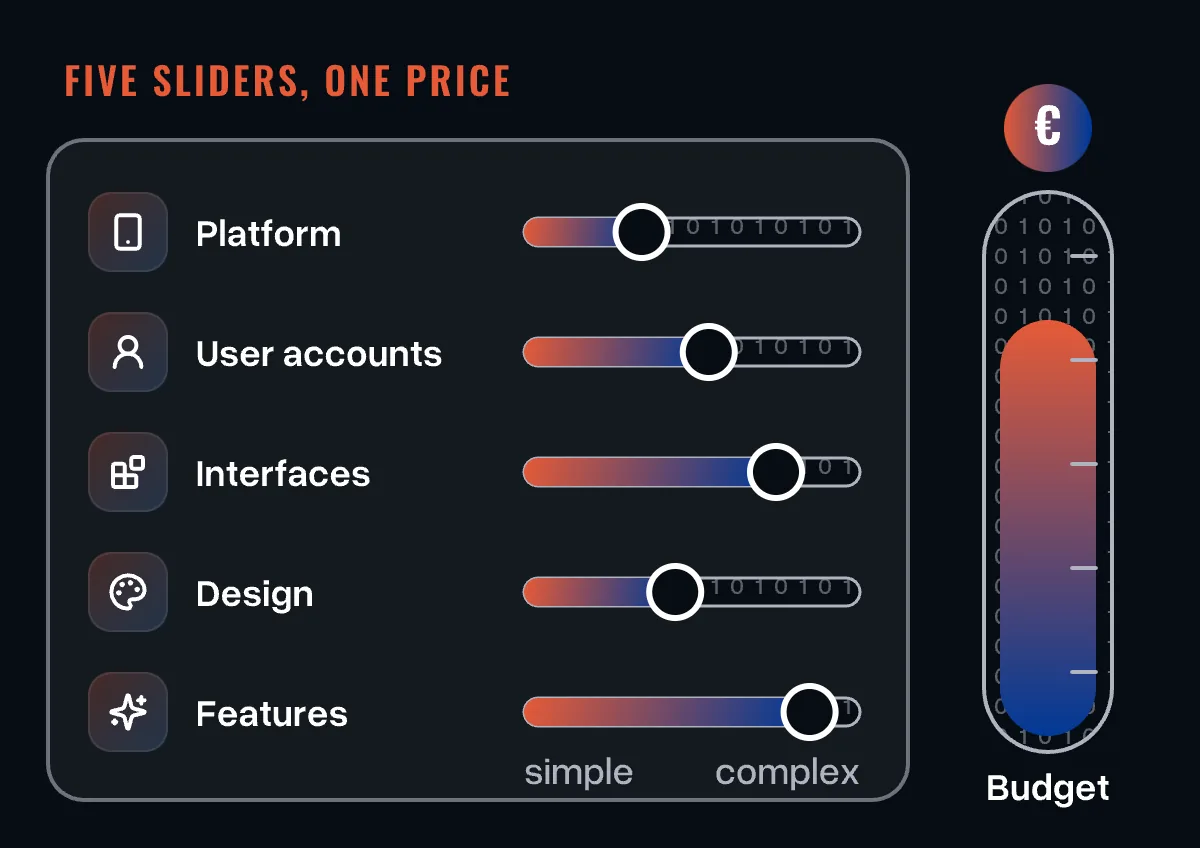
1. Platform: iOS, Android or both
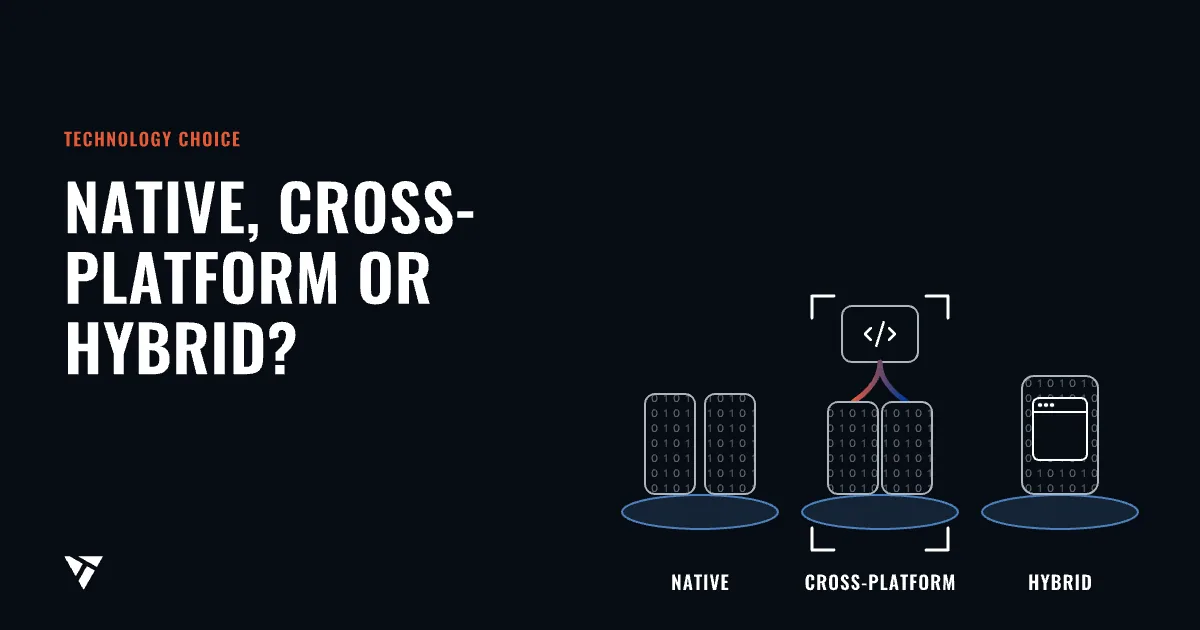
The first decision is where your app has to run. Most companies want to be in both the Apple App Store and Google Play. If you build two separate native apps, the effort comes close to double. Cross-platform frameworks can share most of the code between both platforms - we compare the options in native vs. cross-platform vs. hybrid.
The platform decision sets the base of your budget. Make it deliberately, based on where your users actually are.
2. User accounts and authentication
Login via email or a social account lets you personalise the experience and build a contact list. It also adds complexity: data has to sync across devices, preferences have to be stored, push notifications and multiple sessions per account have to work. If the app loads content from a database or website, server costs come on top.
Apps without login are cheaper, but they rarely fit a business use case. Calculators, notes or calendar tools are typical examples.
3. Interfaces to other systems
A database-backed app needs a server that stores and delivers data. Apps that connect to other platforms do this through APIs. The number of interfaces and their complexity have a direct impact on effort and cost.
4. User interface and design
Design decides how users perceive your app. It should match your brand across website and other channels, and it has to set you apart from what is already on the market. If your app offers no clear benefit, it will not earn a place on the user's phone.
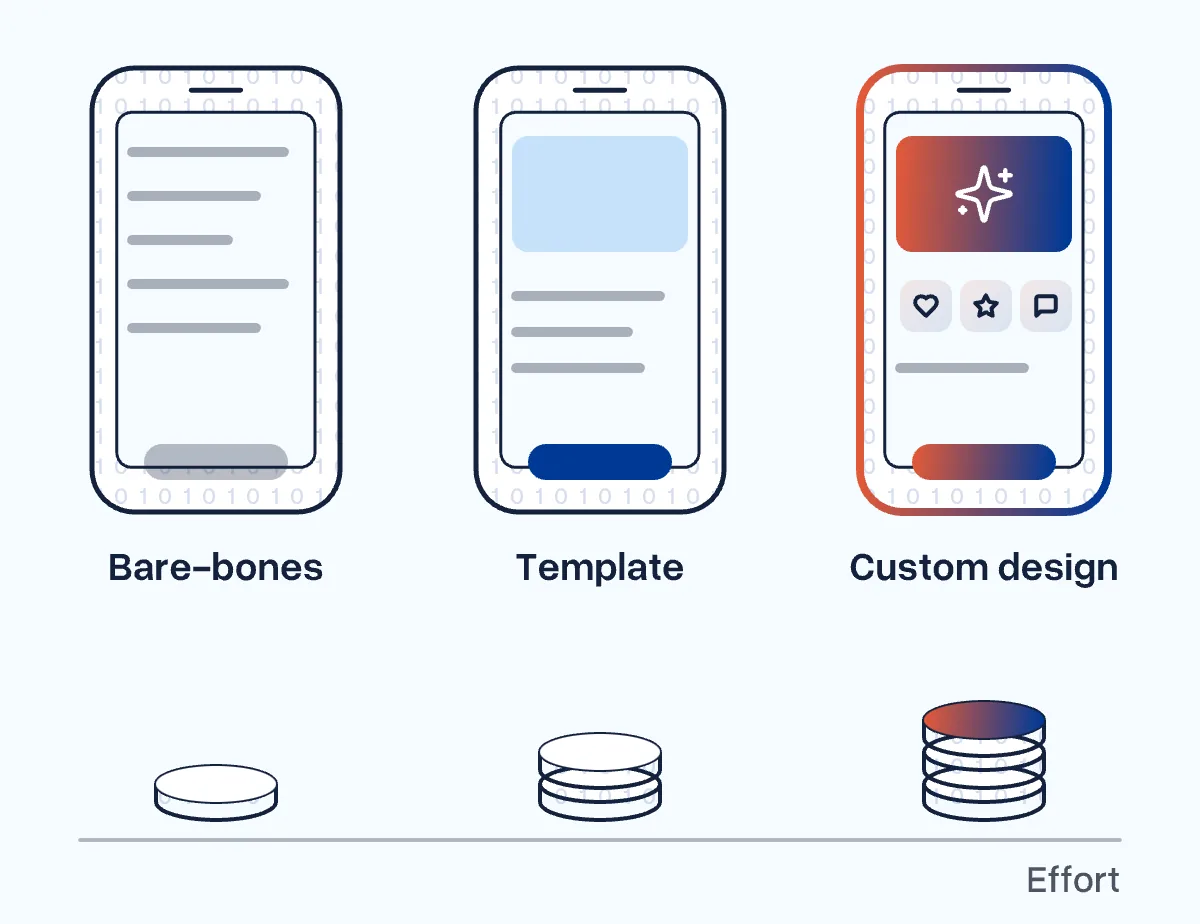
Icons, tabs, graphics and animations make an app more engaging, and each element adds effort. As a rule: a bare-bones design is cheapest, a template-based design costs a little more, and a custom design costs the most.
5. Features and monetisation
If you want to earn money with the app, the model matters. A one-off purchase price is simpler to build. In-app purchases take more work, but they often perform better over time. Rating or review functions add further scope, depending on how complex they need to be. More on the options in app monetisation models.
How to get an estimate you can plan with
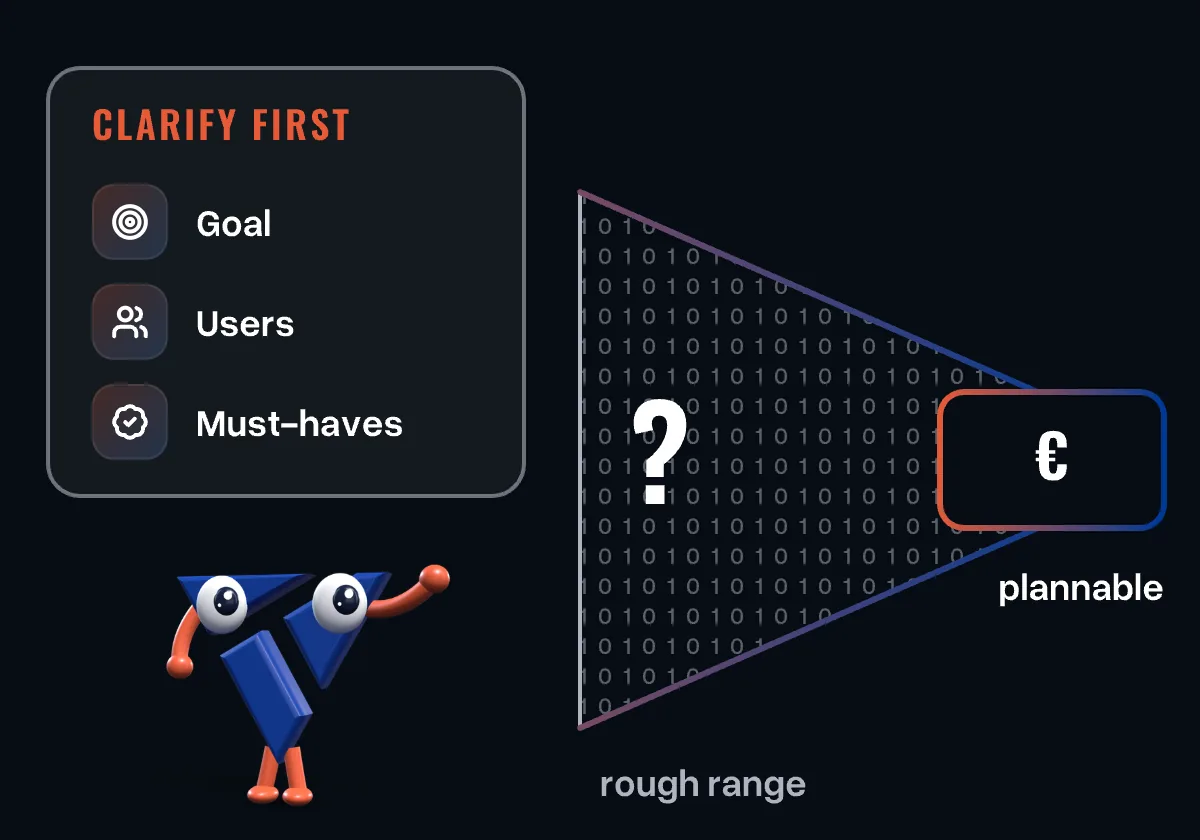
Every feature adds cost. The most expensive app is the one full of features nobody uses. Clarify your goal, your users and your must-have features before development starts - that is what makes an estimate reliable.
Want a concrete number for your idea? Request a quote or talk to us.