

A solid app strategy needs a real budget, and development is only part of it: maintenance and support add ongoing costs after launch. The good news is that you can lower the cost without lowering the quality. These six levers make the biggest difference.
Key takeaways
- The development approach (native, cross-platform, hybrid) is the biggest cost lever.
- Offshoring lowers rates but brings language, time zone, market and legal challenges.
- Fixed price gives budget certainty; time and materials gives flexibility.
- An MVP and a lean feature set cut costs and reduce risk.
- A local partner who owns the result lets you use a distributed team without losing control.
Want to learn more?
In a free strategy call we answer your questions about cost, technology and process.
Book a call1. Choose the right development approach
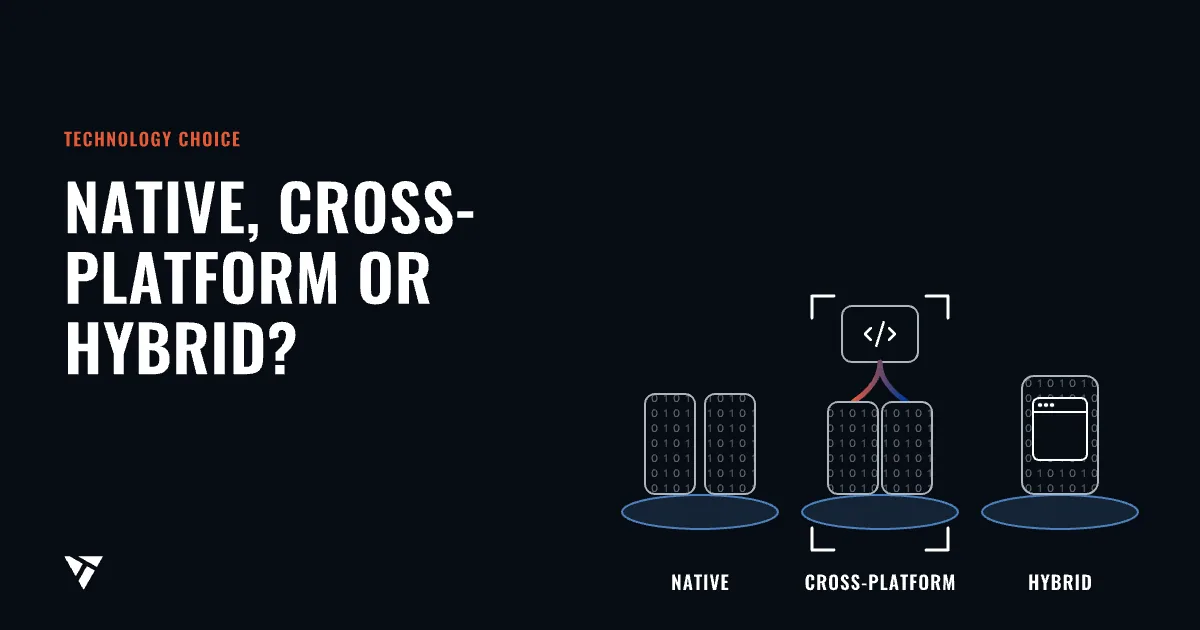
Your choice of technology and approach has a big impact on cost. Native development is the most expensive: it delivers the best experience and full access to device hardware, but you build a separate app for each platform.
Cross-platform development is more affordable and comes close to native UX. If your app does not rely heavily on hardware functions, it is often a good fit. Hybrid development is the cheapest: web technologies wrapped in a native container, launched quickly on all platforms.
We compare the three approaches in detail in native vs. cross-platform vs. hybrid.
2. Consider offshoring - with open eyes
Offshoring is the most common way to lower development costs. Countries with lower labour costs offer skilled developers at competitive rates, and many agencies there have specialised teams for different technologies.
The challenges are just as real:
- Language barriers that lead to misunderstandings
- Limited knowledge of your local users and their expectations
- Time zone differences that slow down communication
- A different legal jurisdiction, which complicates things if you need legal recourse
For a full comparison, read should you hire an app development agency.
3. Pick the right engagement model
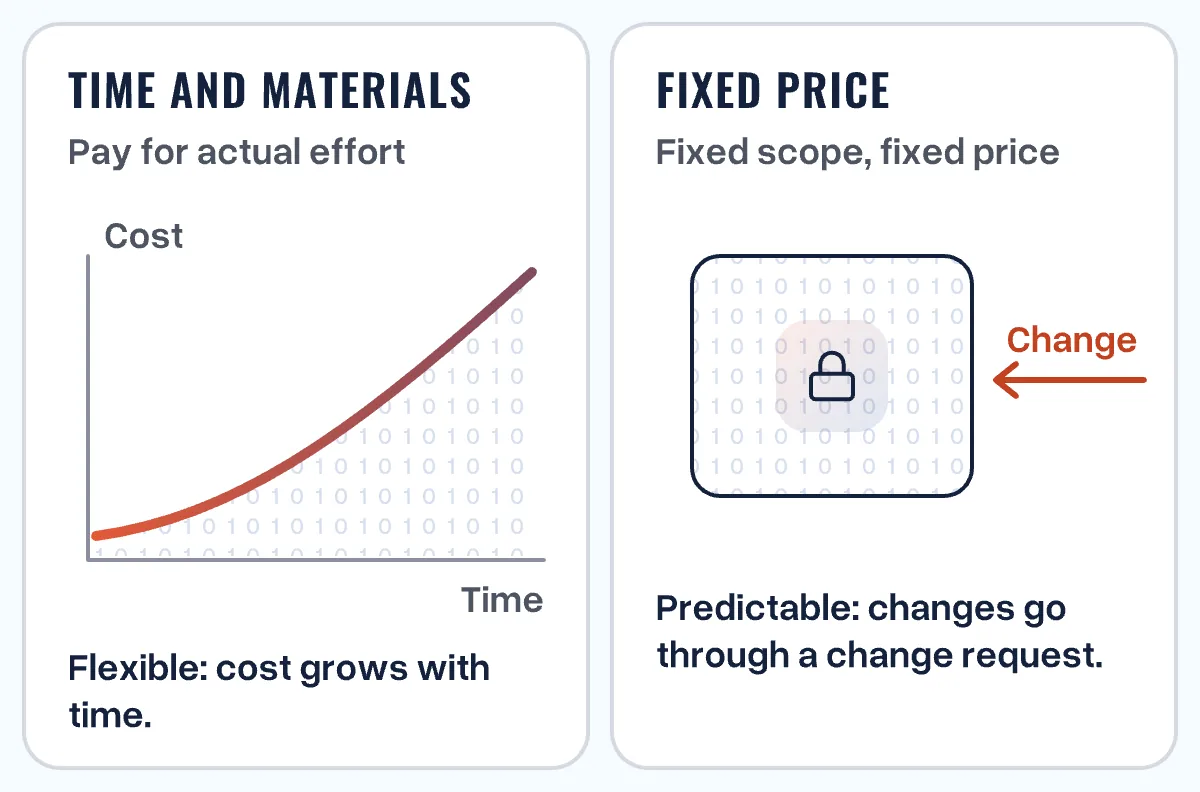
Time and materials: maximum flexibility. You can change requirements at any time and pay for the time and resources actually spent. The longer development takes, the more it costs.
Fixed price: the partner quotes a fixed price based on a detailed specification. You know exactly what the app will cost; changes go through a formal change request. This works well for SMEs - provided the planning up front is thorough.
4. Start with an MVP
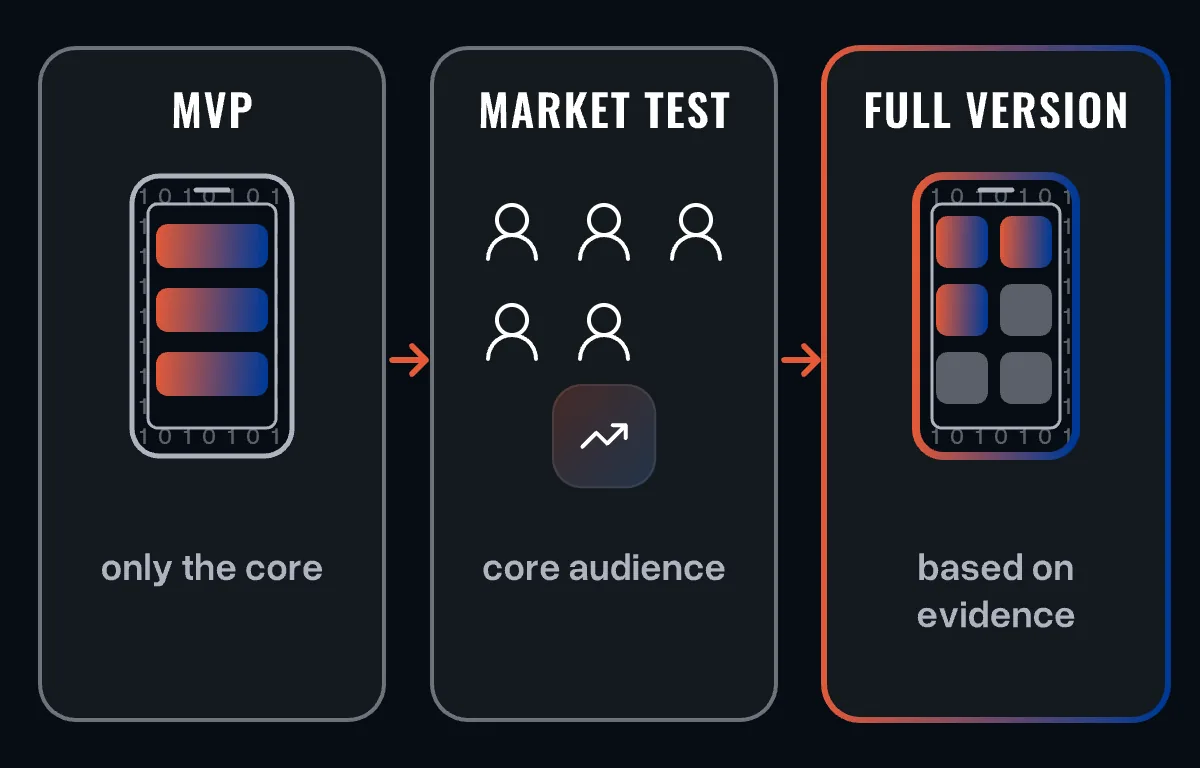
A minimum viable product is the leanest version of your app idea: only the features needed to test it on the market. An MVP is built faster and for a fraction of the budget of a full app, so you get real feedback from your target group early.
Promote the MVP to your core audience. Once it gains traction and proves its value, you build the full version on solid evidence.
5. Focus on essential features
If an MVP feels too risky for your brand, trim the full app to its essentials. Identify features that add little practical value. Elaborate animations and pop-ups make an app feel exciting, but they also drive up costs. Any visual element without a functional benefit is an expense you can skip.
6. Work with a local partner who steers the delivery
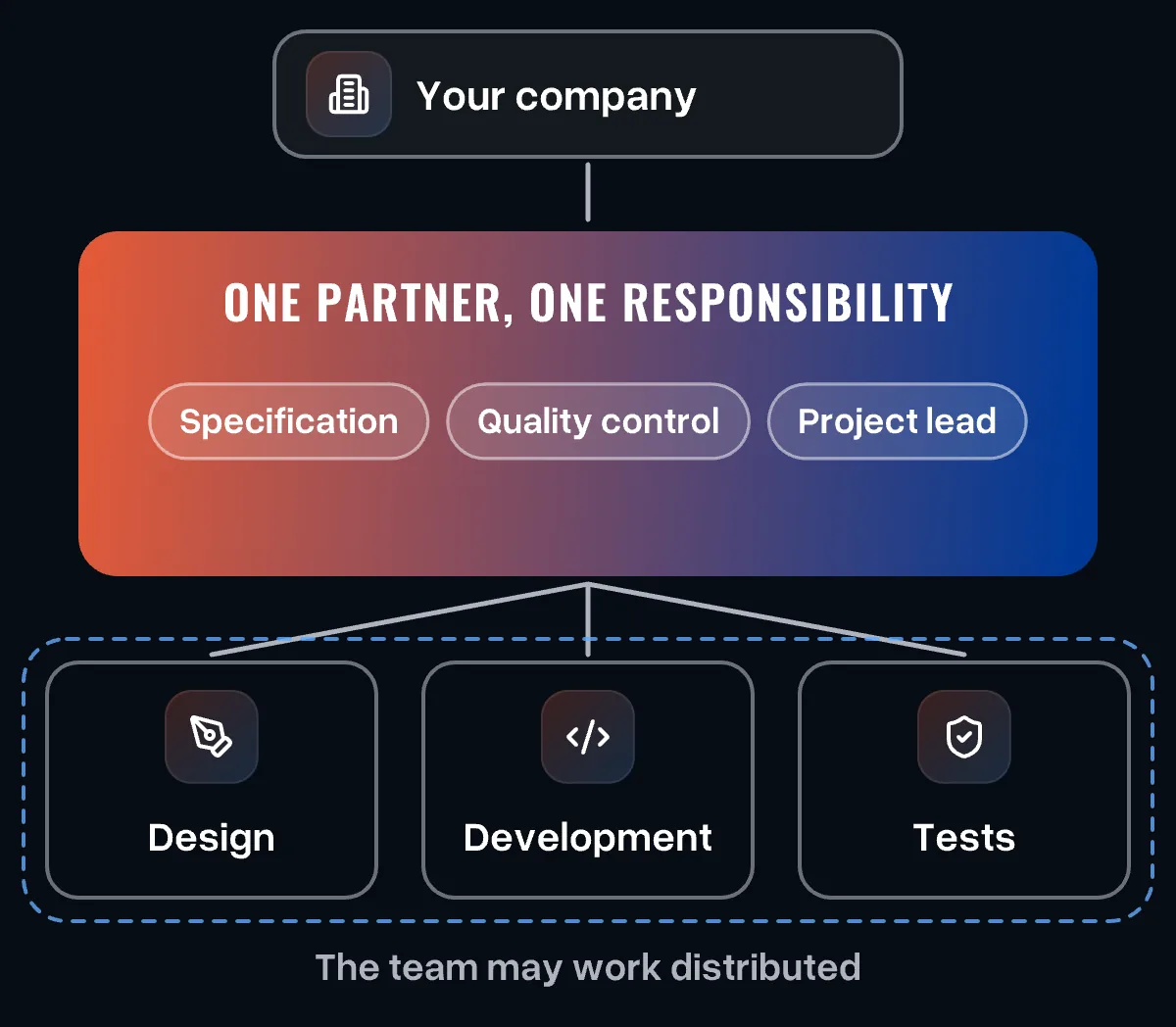
You can get the cost benefits of a distributed team without most of the drawbacks - if a local partner takes responsibility for the result:
- Clear specifications: your business goals are translated into precise technical requirements, so nothing gets lost between you and the development team.
- Quality control: defined review and testing steps keep quality consistent, wherever the code is written.
- Right-sized technology: methodology and technology are chosen for your goals - cost, user satisfaction or speed - so you do not pay for more than you need.
- Market knowledge: knowledge of your local market and users flows into the requirements.
- End-to-end project management: UX design, prototyping, design, testing and deployment in one hand, with maintenance and support if you need it.
Want to build your app within your budget? Get in touch.