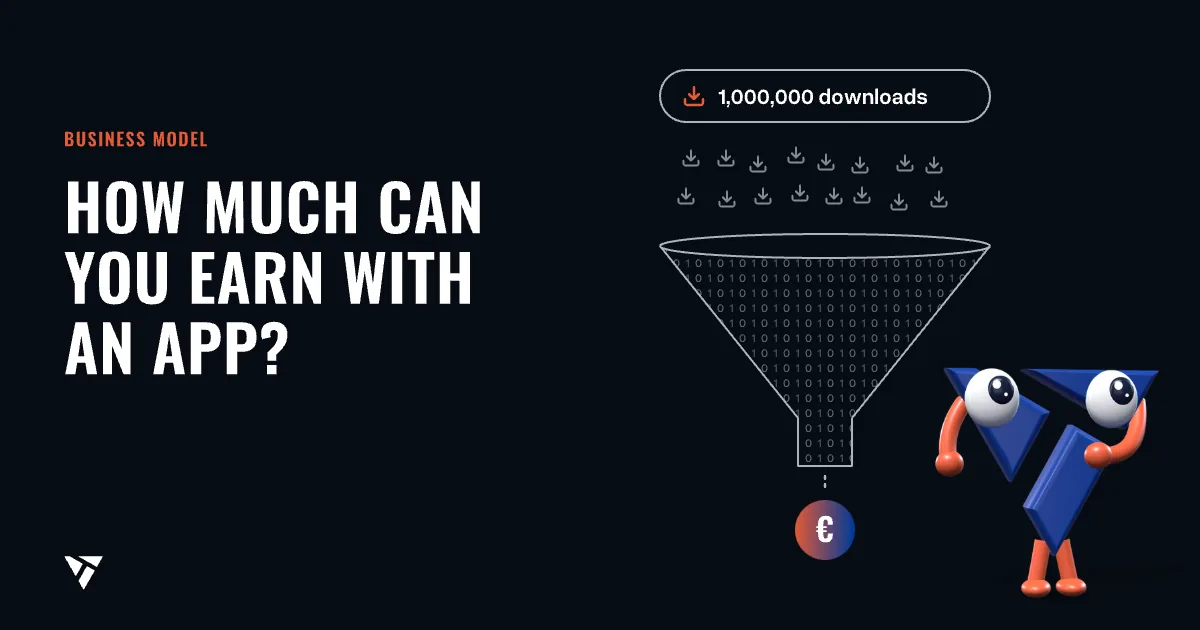


The gap between the most successful apps and the average app is huge, and it is even bigger between categories. Averages will not tell you what your app can earn. What decides it is a real need, a clear value and a monetisation model that fits both.
Key takeaways
- Category averages say little about what your app can earn.
- Subscriptions reward continuous value; ads need a large user base.
- Paid apps deter many users; freemium lets them try first.
- Referrals, merchandise and crowdfunding can complement the core model.
- Choose the model early - it shapes features, design and development cost.
Want to learn more?
In a free strategy call we answer your questions about cost, technology and process.
Book a callWhy averages mislead
Just because other apps sit in your category does not mean they are like your app. Their value proposition and business model can be completely different. Copying their strategy will not copy their success.
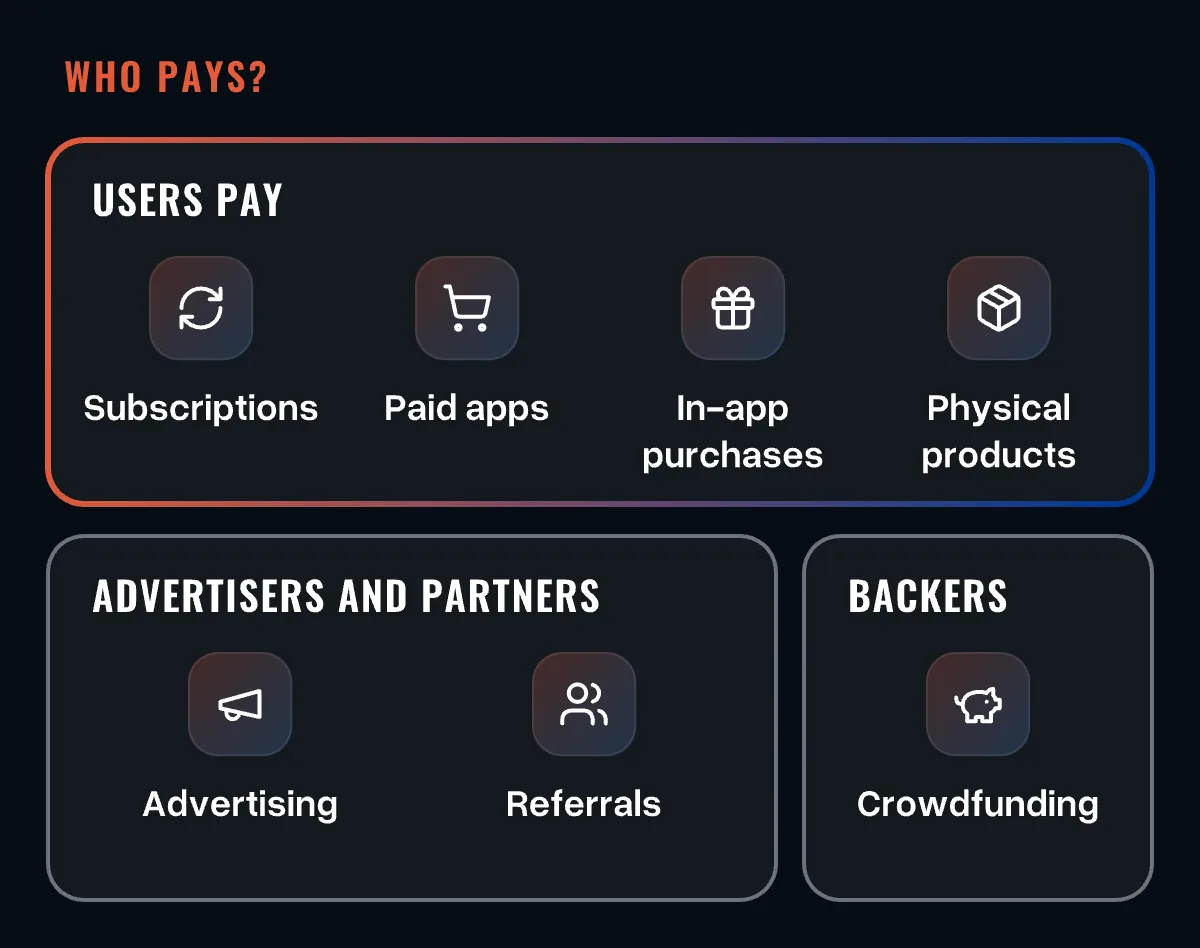
To make money with an app, find a real need - functional or emotional - and meet it better than the alternatives. These are the standard models to do it:
1. Subscriptions
Users pay a recurring fee for access to your app's services. Streaming services, newspapers and many e-commerce businesses rely on subscriptions as their main revenue model. They reward you for delivering value continuously.
2. Advertising
As the saying goes: if you are not paying for the product, you are the product. Many free digital services earn their money from advertisers who place targeted ads, not from their users.
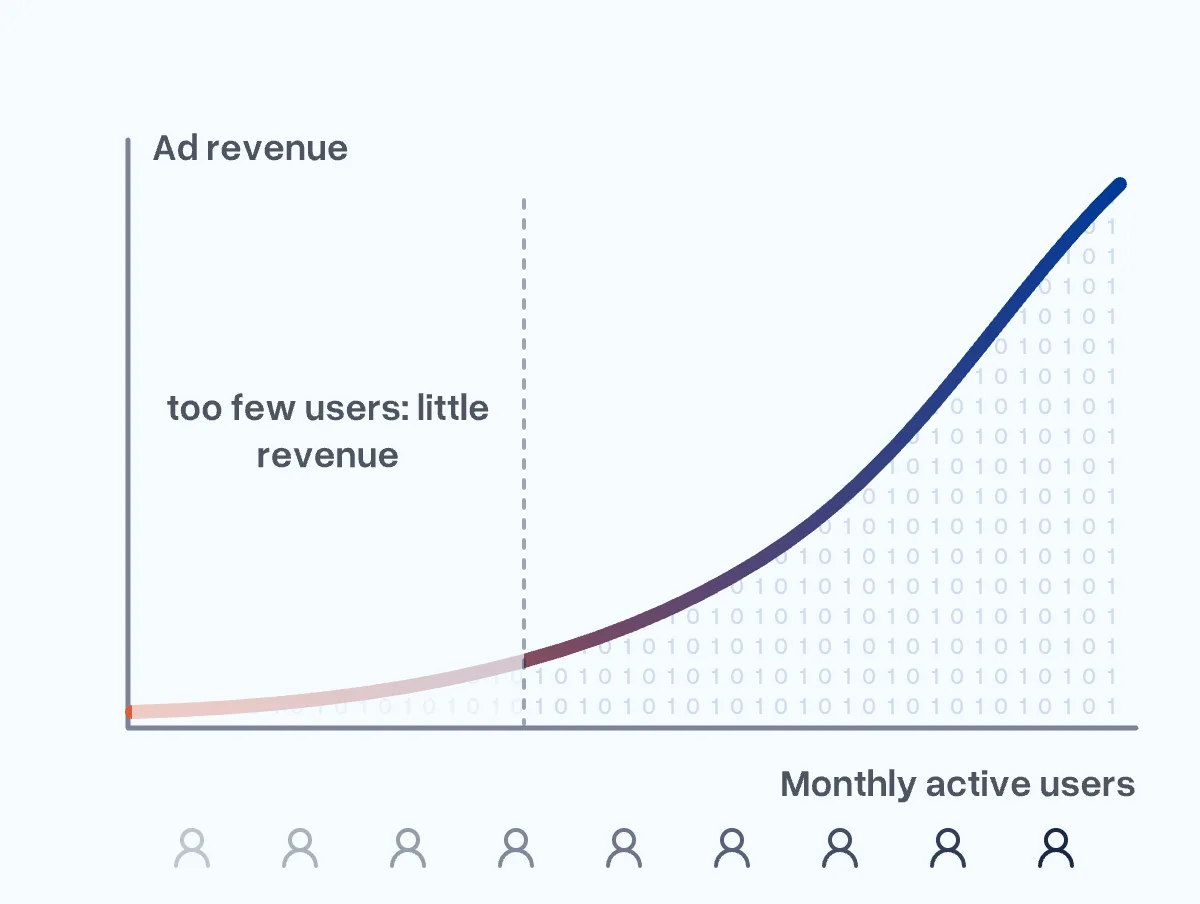
Ads are a common and proven revenue source, but to earn enough you need a large and growing monthly user base.
3. Paid apps (pay per download)
The premise is simple: your app offers value, so users pay to download it. In practice, a price tag drives away many potential users who are used to free apps. Expectations of paid apps are also high: your app has to work flawlessly, or you will attract negative reviews.
Paid apps therefore tend to cost more to build. A free trial can help users try before they buy.
4. In-app purchases (freemium)
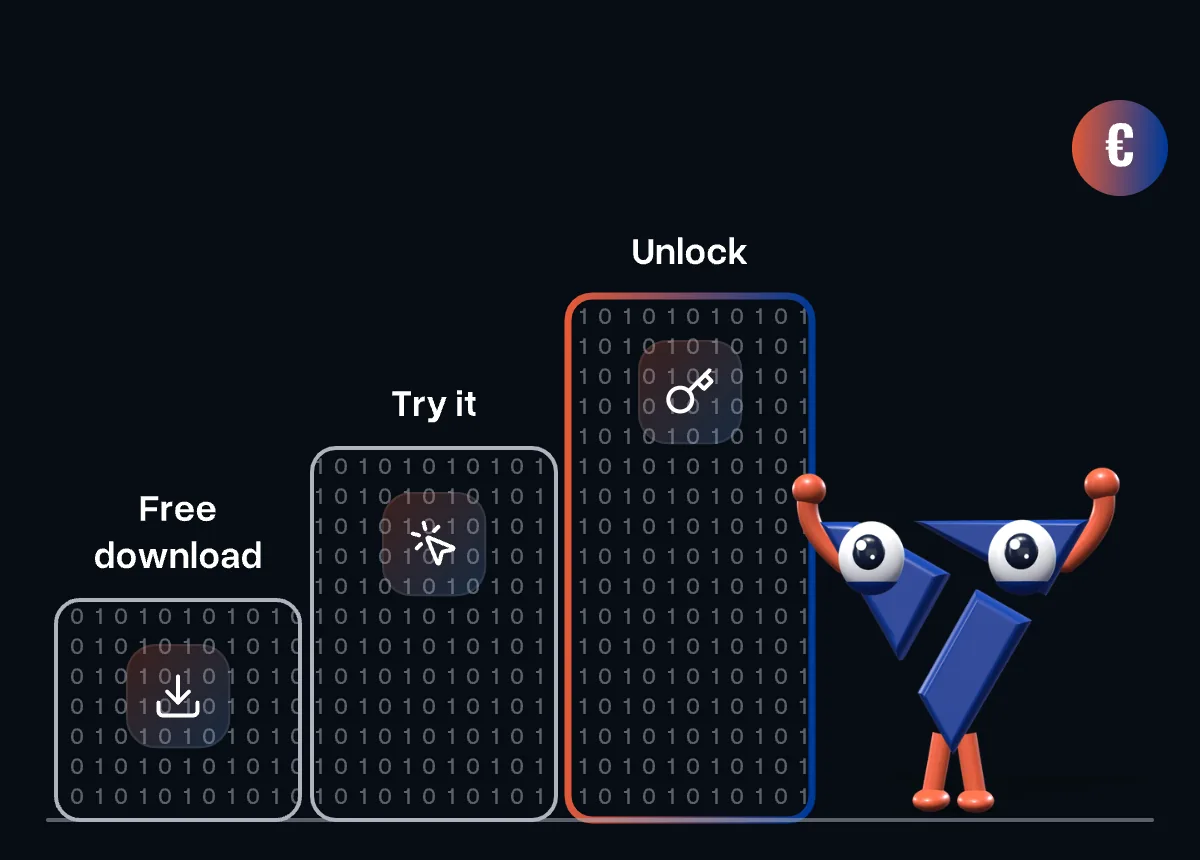
Freemium solves the main problem of paid apps: users can experience the app before paying. The app is free to download, but some content, features or experiences are unlocked with an in-app payment. This model is widely regarded as the most lucrative for app publishers.
Like paid apps, freemium apps must work flawlessly and offer a well-designed experience, which means higher development costs.
5. Referral marketing
You promote third-party apps, services or products inside your app and earn money when users buy or install them. Referral programmes need tools to track and attribute conversions, so they take effort to build, but they tend to bring loyal customers.
Truecaller, the caller ID app, used an inventive version at one point: it promoted third-party apps and gave users limited-time access to premium features for installing them. The partners got promotion, users got premium features, and Truecaller earned from the referrals while giving users a taste of its paid offer.
6. Physical products
Apps can be a strong channel for merchandise: T-shirts, caps, bags, stickers, phone cases and other branded products. Some publishers use a free app to engage users and promote their merchandise - Rovio built a large merchandising business around Angry Birds.
7. Crowdfunding
If you have a novel idea, crowdfunding can give you the financial push to build it. You pitch the idea to its future users and let them invest small amounts, often in return for early access, premium features or merchandise.
Platforms such as Kickstarter, Indiegogo or Patreon help, but a campaign takes a lot of time and effort to promote and requires full transparency about your plans and finances.
Which model is right for your app?
Monetisation is a complex discipline, and the model has to fit your users and your value proposition. Decide it early, because it shapes the features, the design and the development effort.
Have an app idea and need a matching business model? Get in touch.