

You have decided your business needs a mobile app. The next decision matters just as much: who builds it with you. A mobile strategy only works with a user-centred development approach and a partner who keeps improving the app after launch. These questions help you find one.
Key takeaways
- Look for experience with goals similar to yours, even from another industry.
- A serious partner researches your users before designing anything.
- Be wary of short timelines promised before the scope is understood.
- Clarify early how much you want to edit yourself - it affects scope.
- Post-launch support by the same team saves time and money.
Want to learn more?
In a free strategy call we answer your questions about cost, technology and process.
Book a call1. Have you worked on projects with goals like mine?
Apps exist to reach specific business goals: lower costs, more revenue, better engagement, new customers, awareness, customer service or a larger share of wallet. Look for a partner who has built apps with the same or similar goals.
If a team has never worked on comparable goals, the learning curve may be steep - and the result less effective. A partner with experience in similar goals can be valuable even if it comes from a different industry.
2. What does your research process look like?
Research lays the groundwork. Once the partner knows your business goals, they have to work out how an app can win, engage, convert and retain your ideal users.
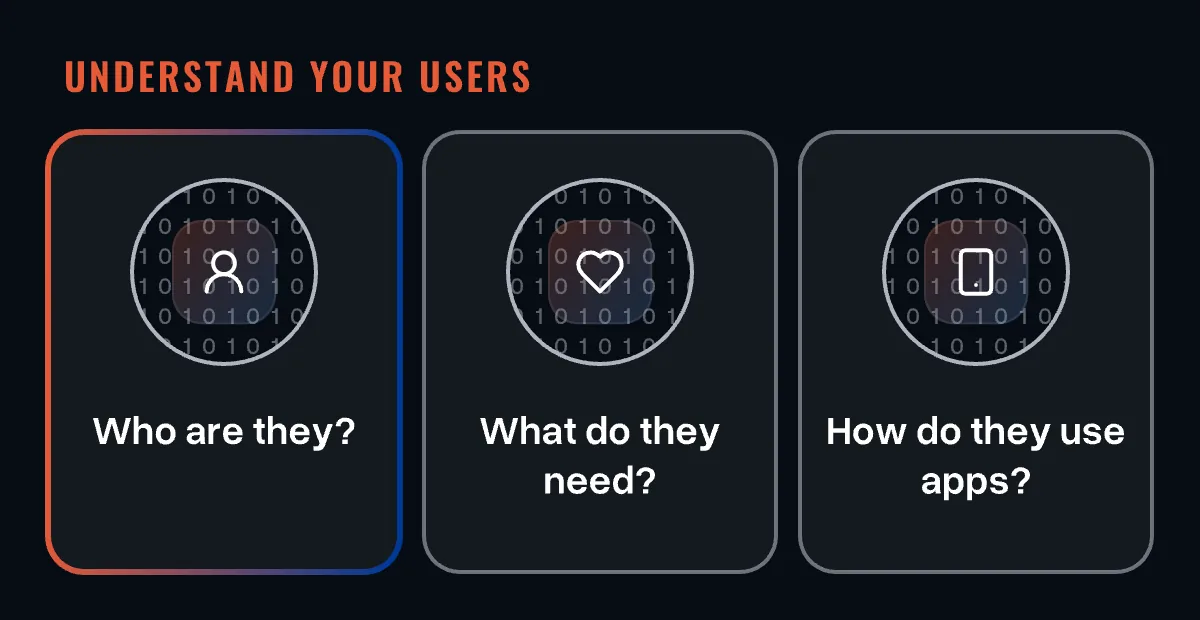
That starts with understanding those users: who they are, what they need and how they use apps. By the end of this phase, a competent partner knows how your audience behaves and how to engage it.
3. How long will the project take from start to finish?
Reliable partners take the time to understand scope and complexity before they commit to a timeline. They do not promise a short schedule to win the deal and then push deadlines once the project is running.
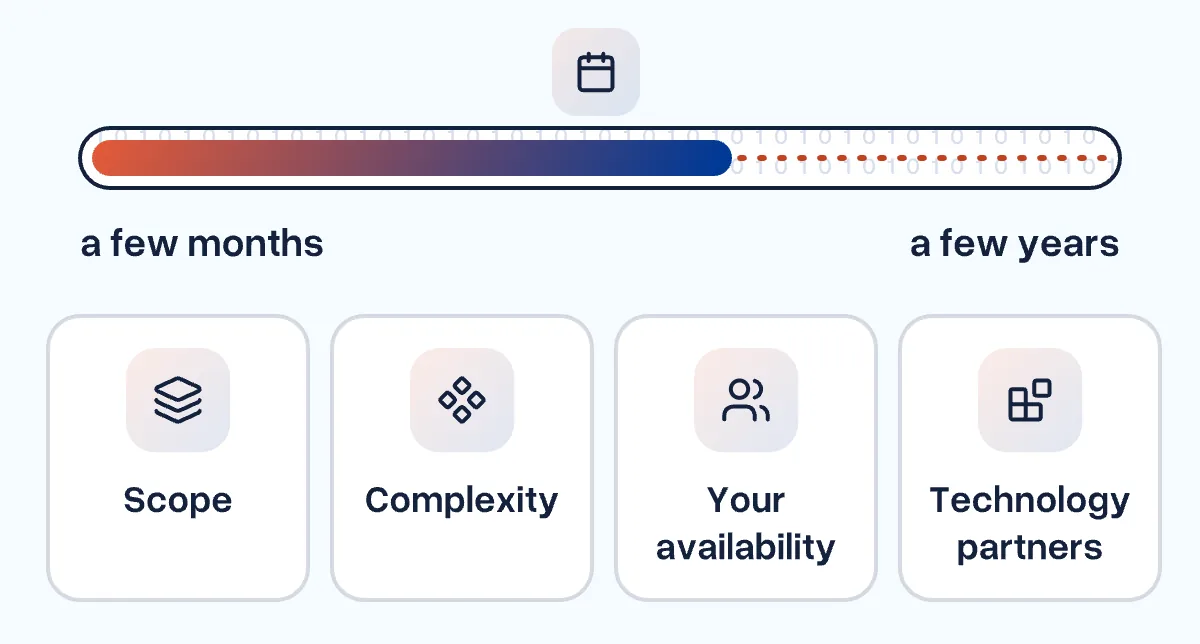
App projects can take anywhere from a few months to a few years, depending on scope, complexity, your availability and that of technology partners. A trustworthy partner explains how each factor affects the timeline and what you can do to speed things up.
4. Which services do you provide?
A long-term partner offers more than development. They refine your idea into core features during the concept phase, design the app with wireframes, mockups and prototypes, build it, test it and deploy it.
Beyond that, they advise you on your mobile strategy, help you get the most out of the app and provide maintenance and further development after launch.
5. How do you approach app store optimisation?
Visibility is not a one-off task. App store optimisation is an ongoing process that helps your app rank for the terms your audience searches for in the Apple and Google stores. It is a niche discipline, so it helps if your partner has experience with it.
6. Will I be able to make changes to the app myself?
As the owner, you will want to change things without always involving the developer. That is possible, but it can add complexity to the project.
Partners usually hand over the source code, so you can make any change - but you may need a technical team to do it. If you want a content management system in the backend that lets you edit content without a developer, it may extend the scope. State your editing needs early, so you and your partner are on the same page.
7. What happens after the first release? Do you offer long-term support?
The phase after launch is at least as important as development. Your partner should monitor user feedback, test reported issues and fix them quickly, so users get a reliable experience.
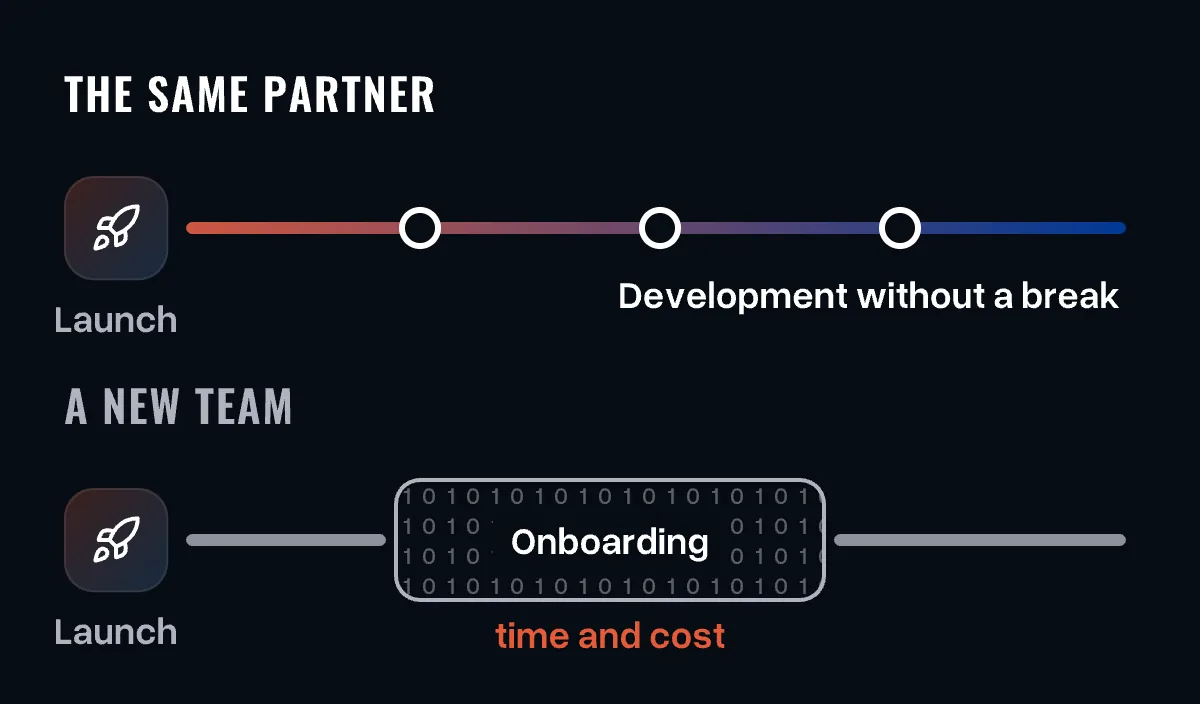
Ideally, the same partner also supports further development. That way, no new team has to spend time and money getting to know your app.
8. What does your development process look like?
Processes differ between partners. Most work with agile or waterfall methods, adapted to their own practice and flexible enough for each client. Whether you bring an idea, a prototype, a competitor app as reference or a full mobile strategy, a good partner turns it into an app your users want to use.
That takes a capable team, typically including:
- UI/UX experts who shape the app experience
- Front-end developers who build the app your users see
- Back-end developers who build the server and infrastructure behind it
- QA engineers who test the app and prevent defects
- A project manager who keeps everything together
Depending on scope, you may need more specialists, such as a business analyst, software architect or product manager. Ask your partner to walk you through how they build, test and refine an app.
Look for commitment, not a perfect method
There is no single right way to build an app, and every partner has its own approach. Focus on how committed a partner is to your outcome - and how transparently they communicate. Read more on what really goes into choosing a development partner, or talk to us directly.