



Technology, budget and the concept of your product all matter when you look for a development partner. But what really decides the choice? In this interview from 2021, Vitec CEO Marc Roset explains the trade-offs, the typical pitfalls and what to do - and not do - before you start.
Key takeaways
- Decide first whether you need a full team with product know-how or only an implementer.
- Freelance projects often fail on missing consulting, communication and processes, not on code.
- A quote that looks too cheap usually saves in places a non-expert does not see.
- A real development process runs from concept and prototype to testing and long-term maintenance.
- Cutting corners in the wrong places typically costs double or triple later.
Want to learn more?
In a free strategy call we answer your questions about cost, technology and process.
Book a callFreelancer or offshore team: which is better?
Before you compare freelancers and offshoring, answer a more basic question: are you looking for an experienced team that covers every area of software development your project needs, or for a developer who implements your idea from a developer's point of view?
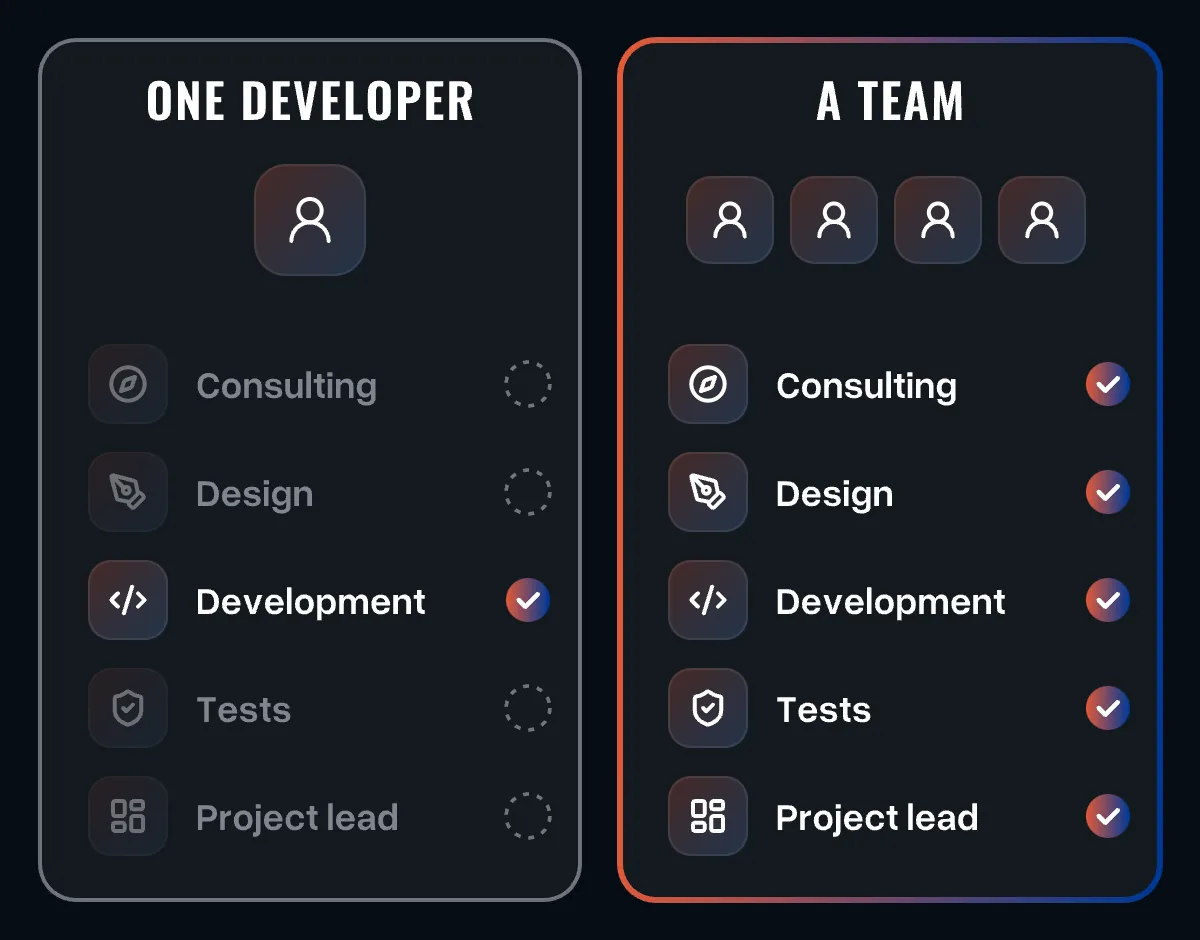
Most companies and founders actually need a partner who brings the missing software know-how - someone who does not just implement the idea, but supports it in the short and long term and increases its value.
The problem is that many try to save money in the wrong places. They assemble a provisional team of individual freelancers and try to set up development processes without in-depth knowledge. That can endanger not only the project but the business: a badly implemented product can damage your reputation or even have legal consequences if regulations are not met.
There is no one-size-fits-all answer. It depends on:
- The objective of the project
- Your existing know-how
- Sustainability
- Quality requirements
- Risk management
What problems do clients bring from freelance platforms?
Many clients imagine development to be simpler than it is - as if a good product were just one line of code after another. Writing code is only one part of success. It takes many well-founded processes and skills working together. Clients who come to us via freelance platforms such as Fiverr or Upwork have often struggled with:
- No initial project consulting
- Poor implementation quality
- Language barriers
- Results that do not match requirements and ideas
- Missed deadlines
- Poor communication
- No initiative and no ideas from the freelancer
Why does this happen so often?
Most clients on freelance platforms have little experience with software development themselves. They write down their idea in a document or presentation and share it. Very often the work is then done strictly to protocol: the concept is implemented as written, without anyone questioning the idea itself:
- Who are the potential users, and what do they expect?
- What do they know from similar products?
- Which digital standards apply?
- Which legal requirements must be met?
- Which cyber security practices make sense?
It is like prescribing medicine to yourself without a medical degree. Without an expert who asks these questions, the risks stay invisible until they become expensive.
What about the low prices?
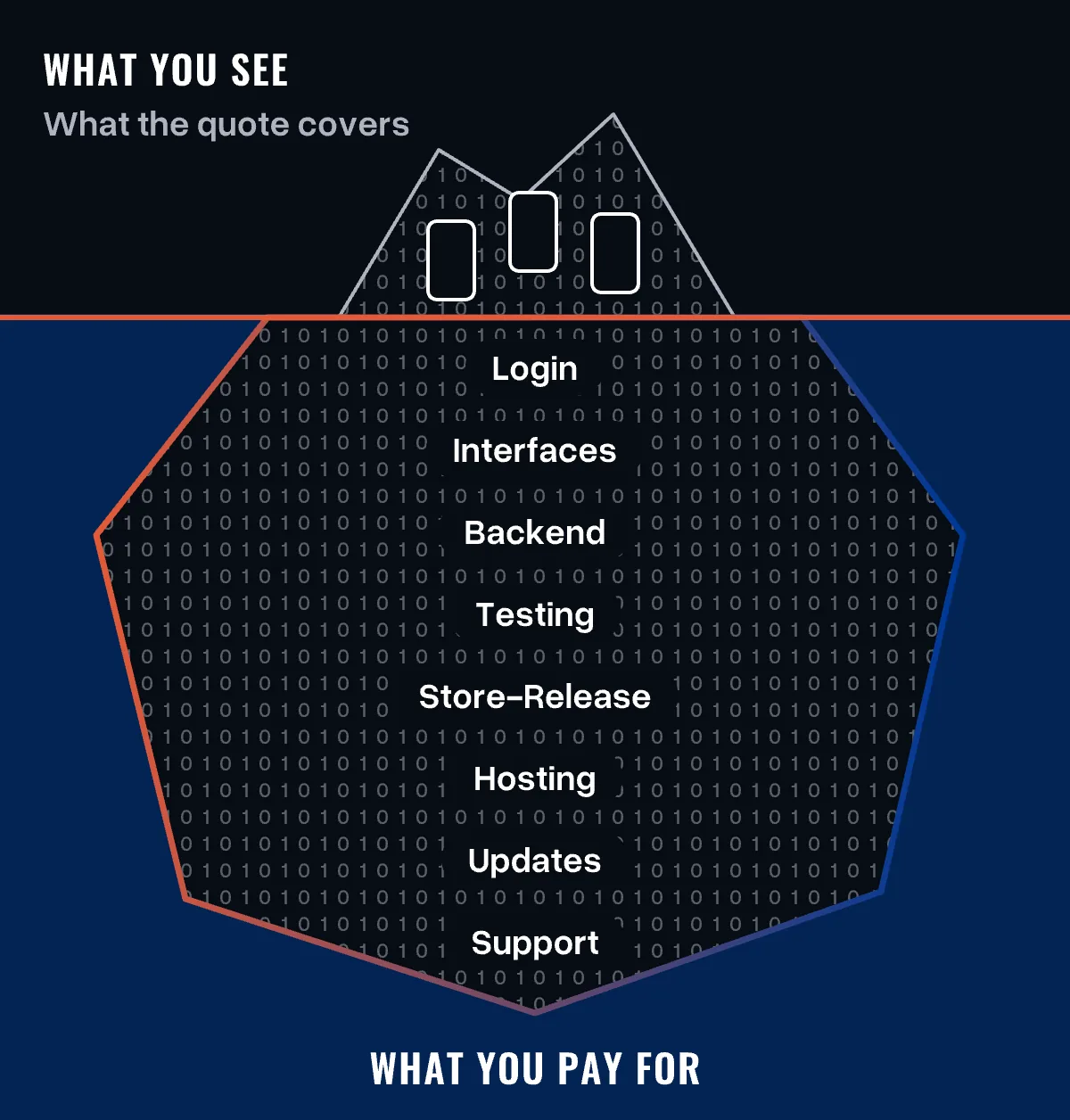
Pricing is the other problem. In 2021, the market was full of international companies advertising around USD 4,000 for complete native apps for Android and iOS, including UI/UX and testing.
Considering everything that goes into a successful app, even medium-sized projects - apps of medium complexity with a backend - quickly exceed 1,000 hours. If such a quote really covered all the necessary processes, it would mean an hourly rate of about USD 4, out of which staff, office, tools and administration all have to be paid. That is implausible even in countries with very low wages. At that time, serious international companies typically charged from USD 20 to over USD 100 per hour.
If you still go the cheap way, be aware that you are saving in places a non-expert will not notice at first - but which can seriously affect the success of the project.
What is actually part of a software development process?
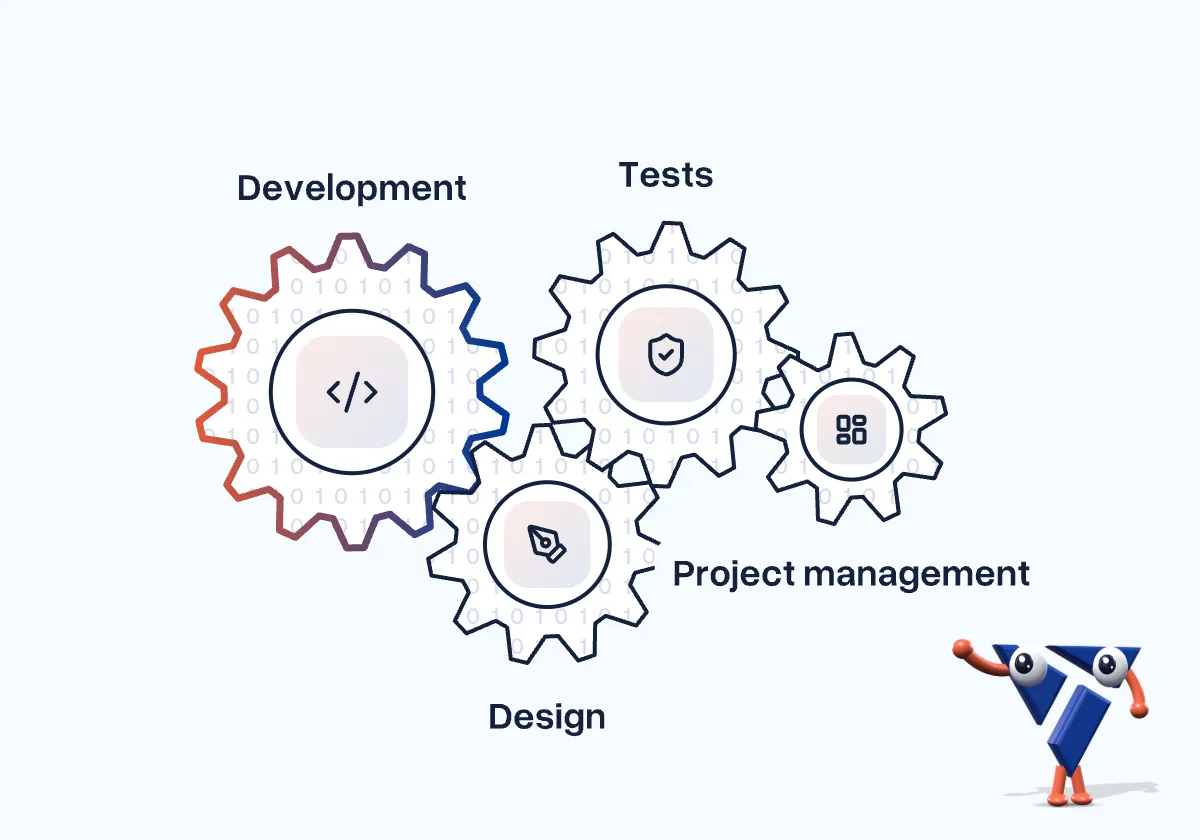
A comparison I often use with clients: when you build a machine, the idea becomes a concept, the concept becomes a CAD design, simulations test the design under stress, and then the machine is built and tested. A project manager closes the gaps and keeps every area - and the customer - informed. In software development, the same processes are a must:
- Idea generation
- Digital concept, based on product and market requirements
- Validation with a prototype
- UI/UX design
- Development of the product, supported by project tools (such as Jira, Asana, Redmine), version control (such as GitHub, Bitbucket), QA tools (such as LambdaTest, Testsigma) and processes that keep scope, quality and schedule on track
- Final end-to-end testing
- Long-term maintenance and further development
All of this needs different experts - developers, designers, testers, project managers - and, depending on complexity, more. Keeping the gears turning takes a well-coordinated team and solid processes. If you want quality to be the result of good project management and not a random side effect of writing code, plan these processes and tools into your budget - especially for long-term support and development. Otherwise, you have to lower your expectations accordingly.
What happens after the first release?
Version 1.0 is only the first step of the product cycle. How easily and safely your product can evolve depends on how it was built, and which practices for scalability, security and quality assurance were applied from the start.
Besides running costs - servers, keeping the app stable, OS updates, adapting third-party libraries - you need to respond to user feedback and keep users happy with new features. There is hardly a more dynamic market than the app market. You will need long-term support and monitoring of crash rates, performance and UX weaknesses. Without that, users leave as fast as they came.
Can outsourcing to low-wage countries reduce costs?
In theory, yes - hourly rates are lower. But you face cultural differences, language barriers, time zones, a different legal system and a long distance between both companies. That can lead to critical situations no business owner wants.
In such markets you also find small agencies made up of loosely connected freelancers, without clear structures or established processes. High turnover means lost know-how, delayed projects and few of the benefits that long-term collaboration in interdisciplinary teams brings. In most cases, lower costs mean savings in parts of the development process - and that costs quality.
We have tried to close that gap between quality and competitive pricing: as a European company, with a local project management team as your point of responsibility, and with long-standing partners whose processes we have qualified over many years.
What would you recommend to people without a technical background?
Savings usually mean fewer project management hours, less consulting, less experience. If you want to implement your idea in line with regulations, security and industry standards, you need a partner who can tell you how to do it right.
A single freelancer or a very small company will rarely have that breadth of knowledge. The consequences can be harsh: poor UX, quality defects, security gaps that lead to data theft, or violations of regulations - and with them a failed product or penalties.
So get informed, get proper advice and evaluate with a partner how to implement the project most effectively before you start. I always tell our clients: it is your idea. When I brought my first digital product to market, I did not save on consulting and development - I made sure the idea was in the hands of experts.
If you cut corners in the wrong places, you end up paying double or triple - and doing it right would have been cheaper in the end.
Marc Roset, CEO of Vitec
And if that investment is not worth it to you, you are probably not convinced enough of your idea.
What do you think?
We believe that successful digital products come from honest communication, transparent project execution, a product-centric approach and long-term relationships. Whether you are just starting or already lead your industry digitally, we are happy to answer your questions about the development process or your app idea. Get in touch to arrange a first conversation.